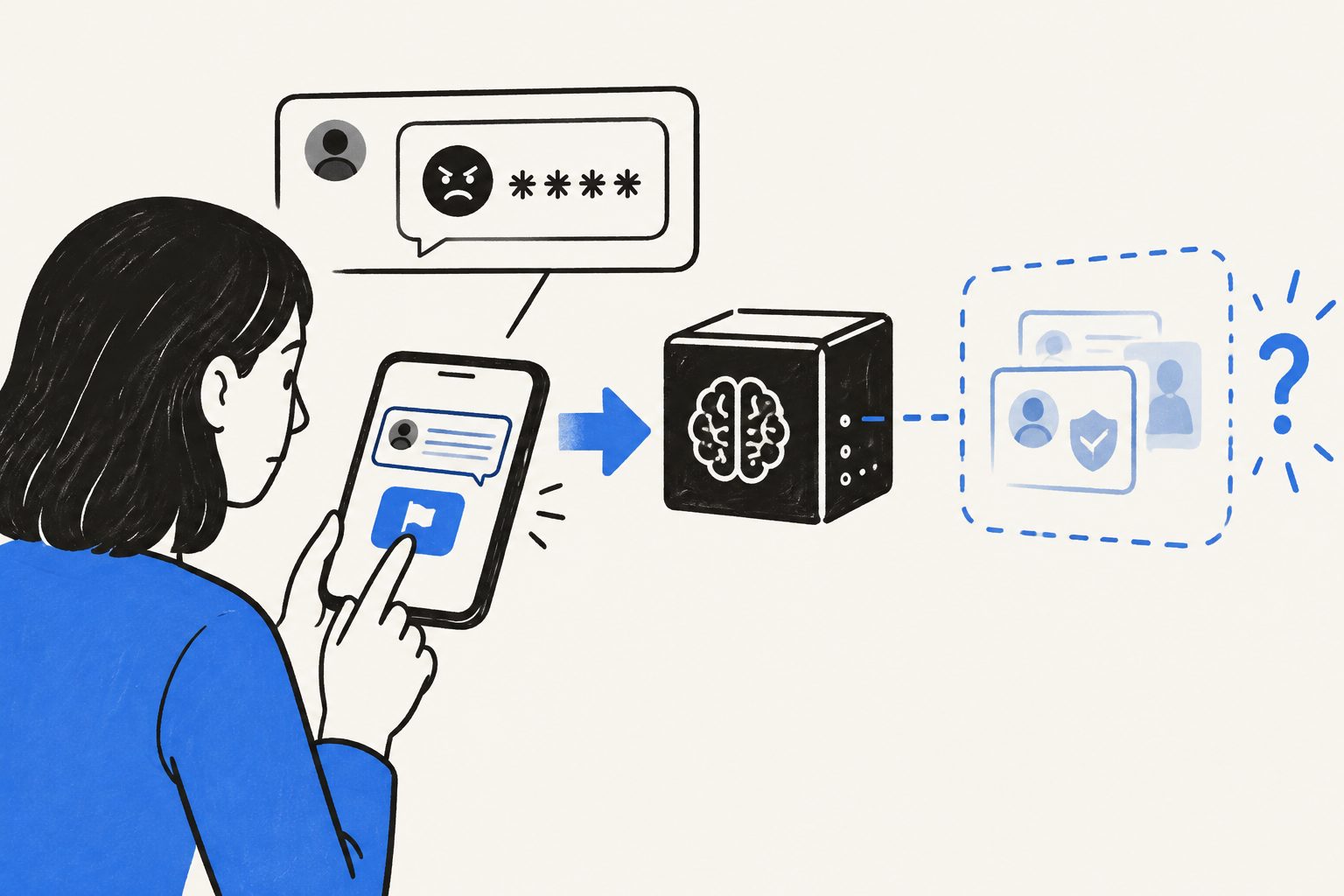
Interviews suggest clearer explanations and stronger privacy protections could make content reporting easier to understand and use.
Researchers interviewed 25 social-media users with recent experience reporting posts or accounts. Participants described reporting as a way to prevent harm, fulfill a civic responsibility and sometimes respond to social pressure, while also describing concerns about the time, effort and privacy risks involved.
Although users understood the basic steps—deciding whether content violates rules, choosing a category and receiving an outcome notification—they had differing ideas about what happens during the review process. The researchers argue that limited procedural transparency leaves users to infer how reports are handled by platforms, automated systems and human moderators.
How users see reporting
Participants generally viewed reporting as an important way to voice objections to harmful or inappropriate content and request action from a platform. Their motivations included preventing harm, a sense of civic duty and social pressure. Some users also described going beyond the platform’s reporting process, including contacting people who had posted content they reported.
At the same time, participants faced uncertainty about how reporting works after submission. They commonly described three visible stages: deciding whether to report, selecting a reason and receiving a notification about the result. But the lack of detail about what happens between submission and the final notification led to different interpretations of the process. Participants also raised concerns about the mental effort involved in reporting and possible privacy risks, and some factors discouraged them from filing reports.
Why clear reporting matters
Reporting tools give users a direct way to ask platforms to address content that may harm people or violate site rules. The findings suggest that providing the tool is not enough on its own: users also need to understand how their reports are processed and how their information is handled.
The study also highlights an unresolved division of responsibility. Platforms rely on users to identify and report some harmful material, while users may see reporting as an obligation that shifts moderation work onto them. More understandable procedures, privacy safeguards and lower-burden designs could help platforms support user participation without leaving people uncertain about the process.
What the interviews show
The study is based on 25 semi-structured, remote interviews with social-media users who had recently reported content. Participants were recruited through X, NextDoor and Craigslist, and the researchers used their prior experiences rather than a single platform’s reporting interface as interview prompts.
This qualitative sample was intended to provide detailed insight, not population-wide estimates. Many participants identified with underrepresented groups, and the study did not aim to compare countries or determine which reporting designs are most common or effective. The findings may also be affected by imperfect recall and by participants presenting their reporting behavior in a favorable way. Because the study covered several platforms, it cannot show which specific interface or feedback feature caused a particular view.