Review finds mixed evidence for exercise and nutrition programs in care homes
Most included studies reported better physical function, but quality-of-life results varied and longer-term effects remain uncertain.
High evidenceReviewSome caution advised
Medical disclaimer: This article summarizes research findings and is for informational purposes only. It is not medical advice.
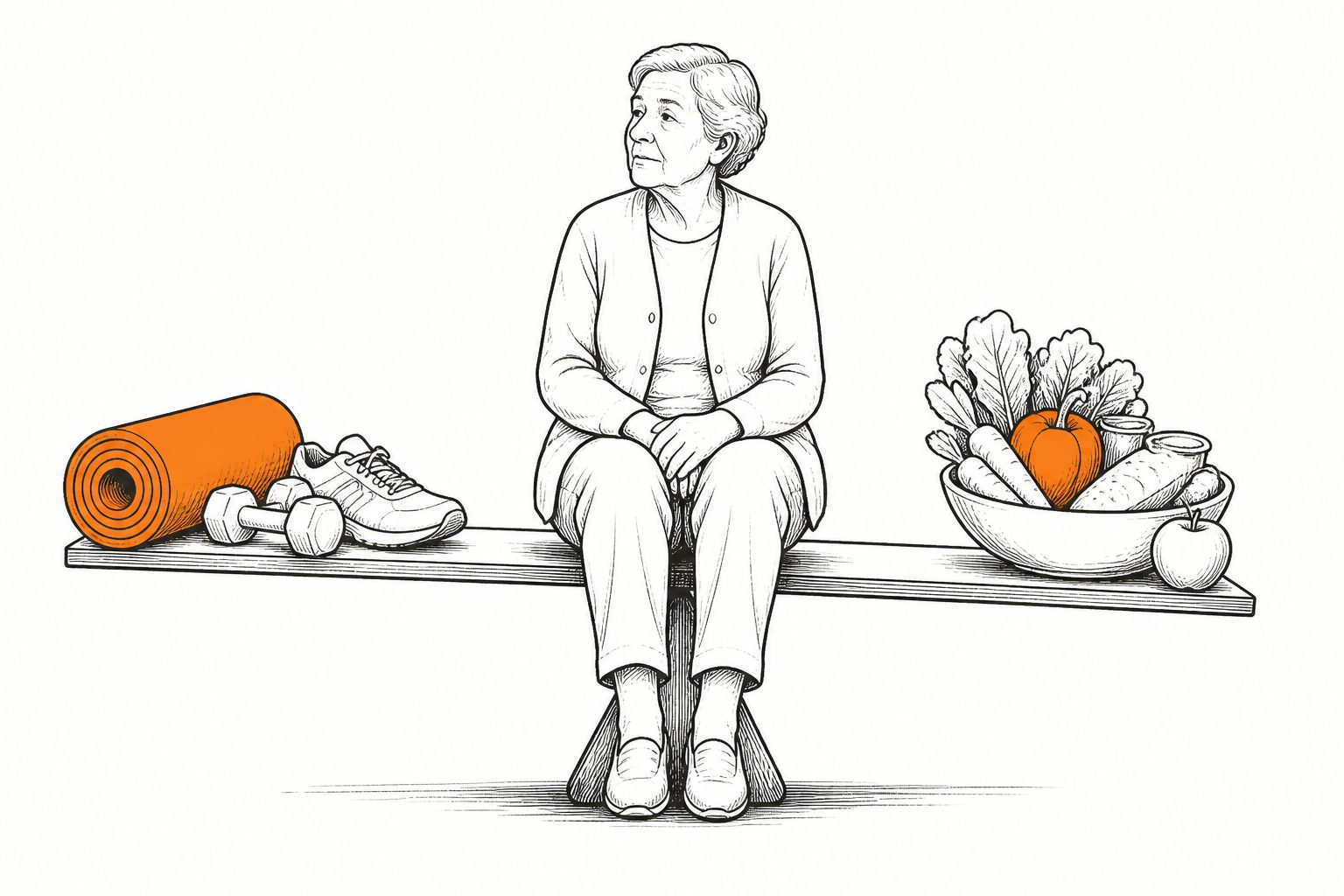
Editorial illustration — not from the study.
Researchers searched PubMed and Scopus for studies available through December 2024. The included programs generally paired resistance, balance or multicomponent exercise with nutritional supplements or education and lasted seven to 26 weeks.
The review found generally positive results for physical function. Nutritional status improved when programs included supplements enriched with protein and energy, but the studies were too different from one another to allow straightforward comparisons, and the effects over longer periods are uncertain.
What the review covered
The researchers conducted a systematic review following PRISMA guidelines. They searched PubMed and Scopus for studies of adults aged 65 or older living in long-term care facilities who received multidomain lifestyle programs combining physical exercise with nutrition-related support. Of 3,093 records identified, seven studies met the inclusion criteria. The abstract does not state the total number of participants or whether all included studies were randomized.
What the review concluded
Most of the seven studies reported improvements in physical function, including gait speed, strength or balance. Results for quality of life were inconsistent. Nutritional status improved when the intervention included protein- and energy-enriched supplements. These findings show associations between the studied programs and reported outcomes; because the review included studies with different designs, durations and assessments, it does not establish that the programs caused all of the observed improvements.
Who this may apply to
The findings may be most relevant to adults aged 65 or older living in long-term care facilities and to programs that combine exercise with nutrition support. They may not apply to younger people, people living outside long-term care, or facilities using substantially different programs. The review does not by itself establish effects for any particular individual or specific intervention.
Why it matters
The findings suggest that combined exercise and nutrition programs can be implemented in long-term care settings and may be associated with better physical function in older residents. The review also indicates that effects may differ by outcome, with less consistent findings for quality of life. This evidence does not establish how well the results would apply to people living independently, younger adults, or facilities using different programs.
Limitations & evidence assessment
Only seven studies were included, despite 3,093 records being screened. The studies differed in design, program duration, exercise content, nutrition support and outcome measurements, which limits direct comparison. Interventions lasted only seven to 26 weeks, so longer-term benefits and whether changes can be maintained are uncertain. The abstract provides too little information to assess the total sample size, the quality of each individual study, or how often control groups were used.
Why this evidence level: Systematic review aggregating primary studies with explicit methodology.
Evidence levels are editorial estimates derived from study metadata — they are not clinical appraisals.
This systematic review examined randomized human trials of concurrent chemotherapy and radiation for locally advanced head and neck, cervical, esophageal, and non-small-cell lung cancers. Across the included trials, combined treatment was reported to provide better overall survival than radiation alone, but it also caused more severe short-term side effects. The review did not provide enough information in its abstract to show how many trials or patients were included.
Researchers pooled results from seven human studies comparing multiple-staged with single-stage removal and reconstruction of congenital melanocytic nevi, sometimes called congenital moles. Staged surgery was associated with fewer major wound complications and recurrences, as well as slightly shorter and narrower scars, but the studies did not find a clear difference in cosmetic or overall patient satisfaction.
A cluster-randomized human study in 210 adults with recently detected stage 1 hypertension in Uzbekistan compared salt-sensitivity testing followed by assigned medication choices with conventional management. After 12 weeks, more participants in the testing-guided group reached the study's blood pressure target, although the study was small, short, and conducted in only three primary care centers.