Review finds lower eye-pressure readings after SMILE eye surgery
The analysis also found changes in corneal strength measures, which may affect how pressure readings are interpreted.
High evidenceReviewSome caution advised
Medical disclaimer: This article summarizes research findings and is for informational purposes only. It is not medical advice.
Editorial illustration — not from the study.
Researchers combined results from 17 observational studies of eyes measured before and after SMILE. The studies used Goldmann applanation tonometry, the Ocular Response Analyzer, or Corvis ST to assess intraocular pressure, along with measures called corneal hysteresis and corneal resistance factor.
All three types of pressure measurement showed lower readings after SMILE. The review also found lower values for the two corneal measurements. The authors interpreted these findings as possible postoperative underestimation of intraocular pressure and changes in corneal biomechanics, but the available abstract does not establish whether the measured pressure reduction represented a change in true eye pressure.
The question reviewed
The researchers conducted a systematic review and meta-analysis using studies identified in PubMed, the Cochrane Library, ScienceDirect, and Scopus through April 30, 2026. They included observational studies reporting eye-pressure measurements before and after SMILE. Seventeen studies, covering 1,177 eyes, were analyzed. The review also examined changes in corneal hysteresis and corneal resistance factor. The provided abstract does not give detailed information about participants' ages, follow-up duration, study locations, or how similar the included studies were to one another.
What the evidence shows
After SMILE, pressure readings were significantly lower with all measurement methods studied. The average reduction was 3.47 mmHg with Goldmann applanation tonometry, 2.50 mmHg with the Ocular Response Analyzer, and 1.52 mmHg with Corvis ST. Corneal hysteresis decreased by 1.84 mmHg and corneal resistance factor decreased by 3.01 mmHg. These are changes in measured values; the abstract does not show that the actual pressure inside the eye fell by the same amounts. The review authors concluded that postoperative measurements may underestimate intraocular pressure and that corneal biomechanical changes may affect glaucoma assessment.
Who this is relevant to
The findings may be relevant to people who have undergone SMILE for myopia or myopic astigmatism, particularly when postoperative eye-pressure measurements or glaucoma assessments are being studied. They do not necessarily apply to people who had other vision-correction procedures, people with different eye conditions, or those unlike the participants in the included studies. Because the review combined observational studies and the abstract gives limited demographic and clinical detail, the exact applicability to any individual is unknown.
What this could mean
Eye-pressure measurements are used when evaluating conditions such as glaucoma. If readings are lower after SMILE because the cornea has changed, clinicians and researchers may need to account for that measurement context when interpreting postoperative results. This review describes measurement patterns and associations across observational studies; it does not show that SMILE causes glaucoma, changes a person's true eye pressure by a specific amount, or leads to a particular clinical outcome.
Limitations & evidence assessment
The evidence came from observational before-and-after studies rather than randomized trials, so the analysis cannot firmly establish cause and effect or separate changes in true eye pressure from changes in measurement. The total sample was 1,177 eyes across 17 studies, and the abstract does not report the participants' detailed characteristics, follow-up periods, differences among studies, or whether publication bias was assessed. The abstract also provides no information about a control group or longer-term outcomes. The conclusion about corneal weakening is based on changes in the measured biomechanical parameters; the clinical meaning of those changes is not fully established by the information provided.
Why this evidence level: Meta-analysis pooling multiple studies sits at the top of common evidence hierarchies.
Evidence levels are editorial estimates derived from study metadata — they are not clinical appraisals.
// Source
International Ophthalmology · 2026 · DOI: 10.1007/s10792-026-04194-5
This systematic review examined randomized human trials of concurrent chemotherapy and radiation for locally advanced head and neck, cervical, esophageal, and non-small-cell lung cancers. Across the included trials, combined treatment was reported to provide better overall survival than radiation alone, but it also caused more severe short-term side effects. The review did not provide enough information in its abstract to show how many trials or patients were included.
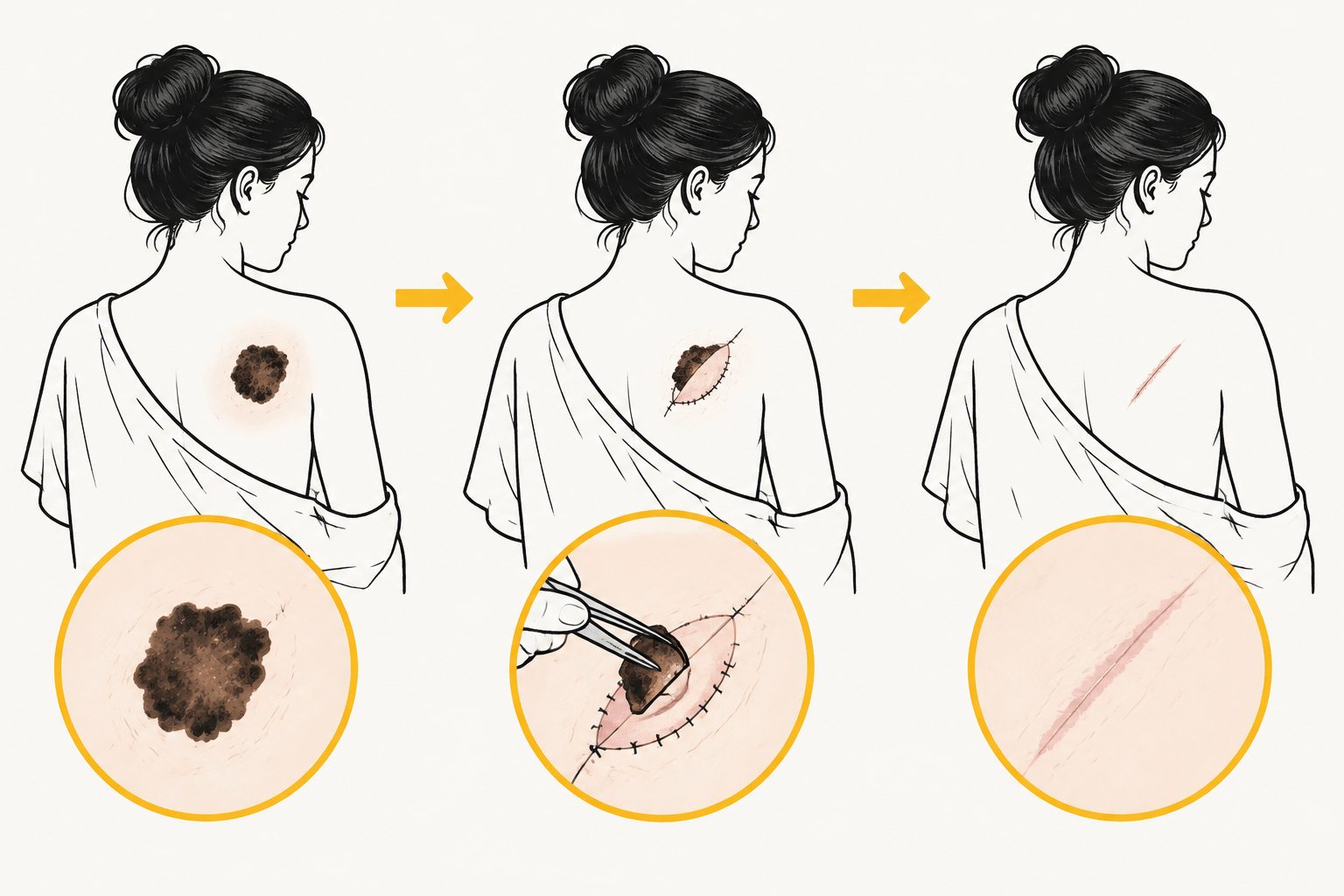
Researchers pooled results from seven human studies comparing multiple-staged with single-stage removal and reconstruction of congenital melanocytic nevi, sometimes called congenital moles. Staged surgery was associated with fewer major wound complications and recurrences, as well as slightly shorter and narrower scars, but the studies did not find a clear difference in cosmetic or overall patient satisfaction.
A cluster-randomized human study in 210 adults with recently detected stage 1 hypertension in Uzbekistan compared salt-sensitivity testing followed by assigned medication choices with conventional management. After 12 weeks, more participants in the testing-guided group reached the study's blood pressure target, although the study was small, short, and conducted in only three primary care centers.