Review examines FASD, harmful sexual behaviour and sexual offences
The review found reported associations in the existing literature but also substantial gaps in understanding vulnerability and context.
High evidenceReviewInterpret with caution
Medical disclaimer: This article summarizes research findings and is for informational purposes only. It is not medical advice.
Editorial illustration — not from the study.
Researchers reviewed published research and legal case reviews about fetal alcohol spectrum disorder (FASD) in relation to harmful sexual behaviours and sexual offences. They found 21 eligible articles: 13 primary studies and eight case-law reviews, three of which also included case studies.
The review reports that the literature has described links between FASD and harmful sexual behaviours or sexual offending. It also emphasizes that important questions remain unanswered, including how specific features of FASD might create vulnerability or affect these situations.
What the review covered
The researchers conducted a systematic scoping review using reporting guidance for scoping reviews. They searched for primary studies, case studies, and case-law reviews that examined FASD in relation to harmful sexual behaviours and/or sexual offending. Twenty-one articles met the stated inclusion and exclusion criteria.
What the review concluded
The researchers identified 21 articles that met their criteria. Thirteen were primary studies, while eight were reviews of case law; three of the case-law reviews also provided case studies. Overall, the reviewed literature reported an association between FASD and increased harmful sexual behaviours or sexual offending, but the abstract does not provide a pooled estimate, detailed effect sizes, or enough information to determine how consistent the findings were across studies. The authors concluded that more research is needed to understand how features of FASD may provide a context of vulnerability for engaging in these behaviours.
Where this may apply
The review may be relevant to understanding reported patterns among people with fetal alcohol spectrum disorder (FASD) who have been studied in connection with harmful sexual behaviours or sexual offences. It does not show that these behaviours occur in all people with FASD, and the abstract does not provide enough information to determine which populations, settings, or legal systems the findings best represent.
What this could mean
The review draws attention to an under-researched area involving health, social vulnerability, and criminal-justice encounters. Its findings may help identify questions for future research, but they should not be interpreted as showing that people with FASD generally engage in harmful sexual behaviours or sexual offending, or that FASD alone explains such behaviour. The review also indicates that available evidence may not adequately explain the surrounding circumstances or specific features of FASD involved.
Limitations & evidence assessment
The review included only 21 articles, and the evidence came from different sources: 13 primary studies and eight case-law reviews, with three of those also including case studies. The abstract does not report the sample sizes, populations, settings, or methods of the individual studies, so their quality and comparability cannot be assessed here. As a scoping review, the work maps available research rather than necessarily combining results into a single estimate, and the reported links do not show that FASD causes harmful sexual behaviour or sexual offending. The authors also identified substantial gaps in understanding how features of FASD may relate to vulnerability in these situations.
Why this evidence level: Systematic review aggregating primary studies with explicit methodology.
Evidence levels are editorial estimates derived from study metadata — they are not clinical appraisals.
// Source
Journal of Police and Criminal Psychology · 2026 · DOI: 10.1007/s11896-026-09848-9
This systematic review examined randomized human trials of concurrent chemotherapy and radiation for locally advanced head and neck, cervical, esophageal, and non-small-cell lung cancers. Across the included trials, combined treatment was reported to provide better overall survival than radiation alone, but it also caused more severe short-term side effects. The review did not provide enough information in its abstract to show how many trials or patients were included.
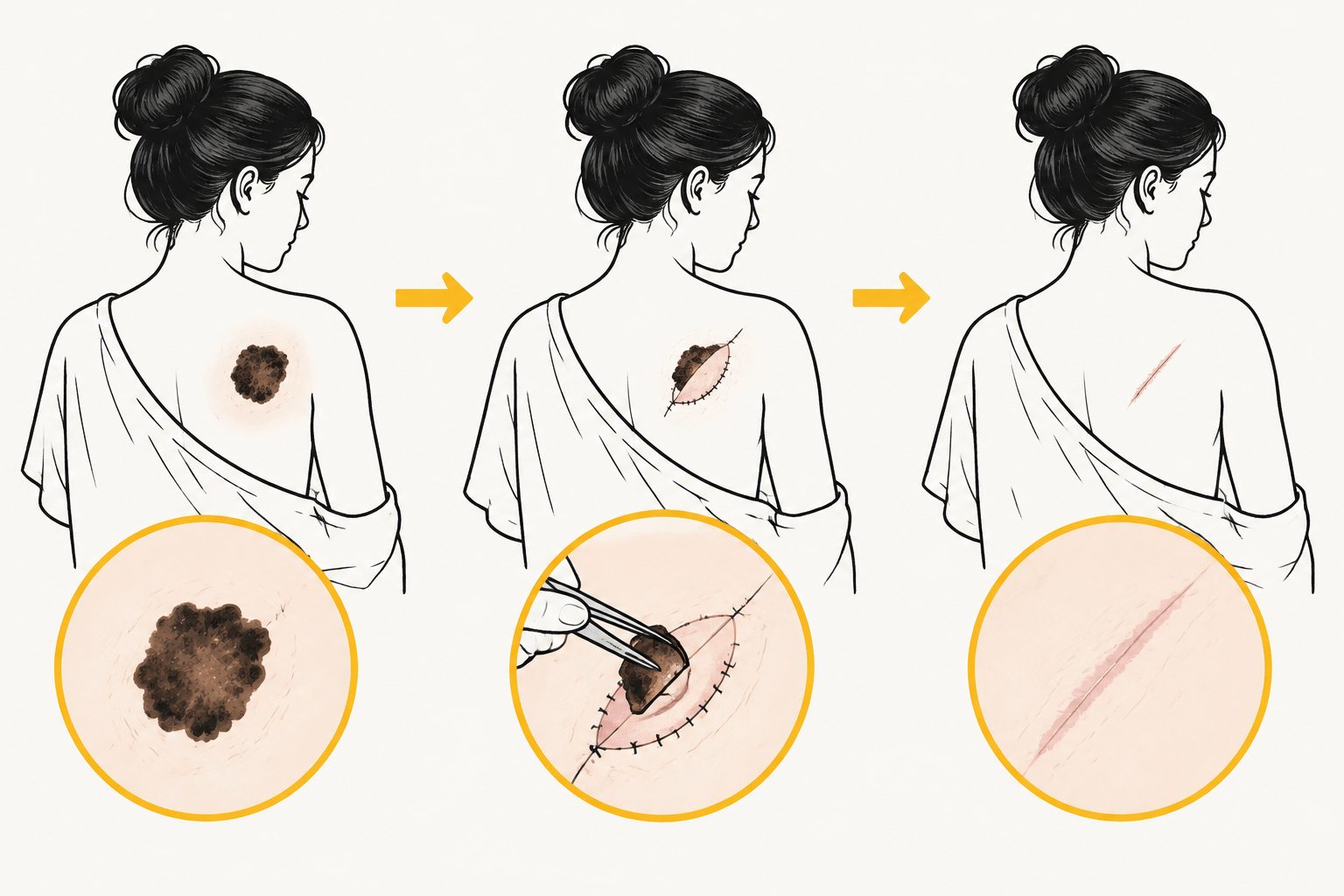
Researchers pooled results from seven human studies comparing multiple-staged with single-stage removal and reconstruction of congenital melanocytic nevi, sometimes called congenital moles. Staged surgery was associated with fewer major wound complications and recurrences, as well as slightly shorter and narrower scars, but the studies did not find a clear difference in cosmetic or overall patient satisfaction.
A cluster-randomized human study in 210 adults with recently detected stage 1 hypertension in Uzbekistan compared salt-sensitivity testing followed by assigned medication choices with conventional management. After 12 weeks, more participants in the testing-guided group reached the study's blood pressure target, although the study was small, short, and conducted in only three primary care centers.