The article investigates how uneven recognition of queer couples across countries affects migration choices and hopes. It focuses on East Europeans living in Scotland before Brexit, when EU citizens had rights to move and live across much of Europe that were not available to everyone.
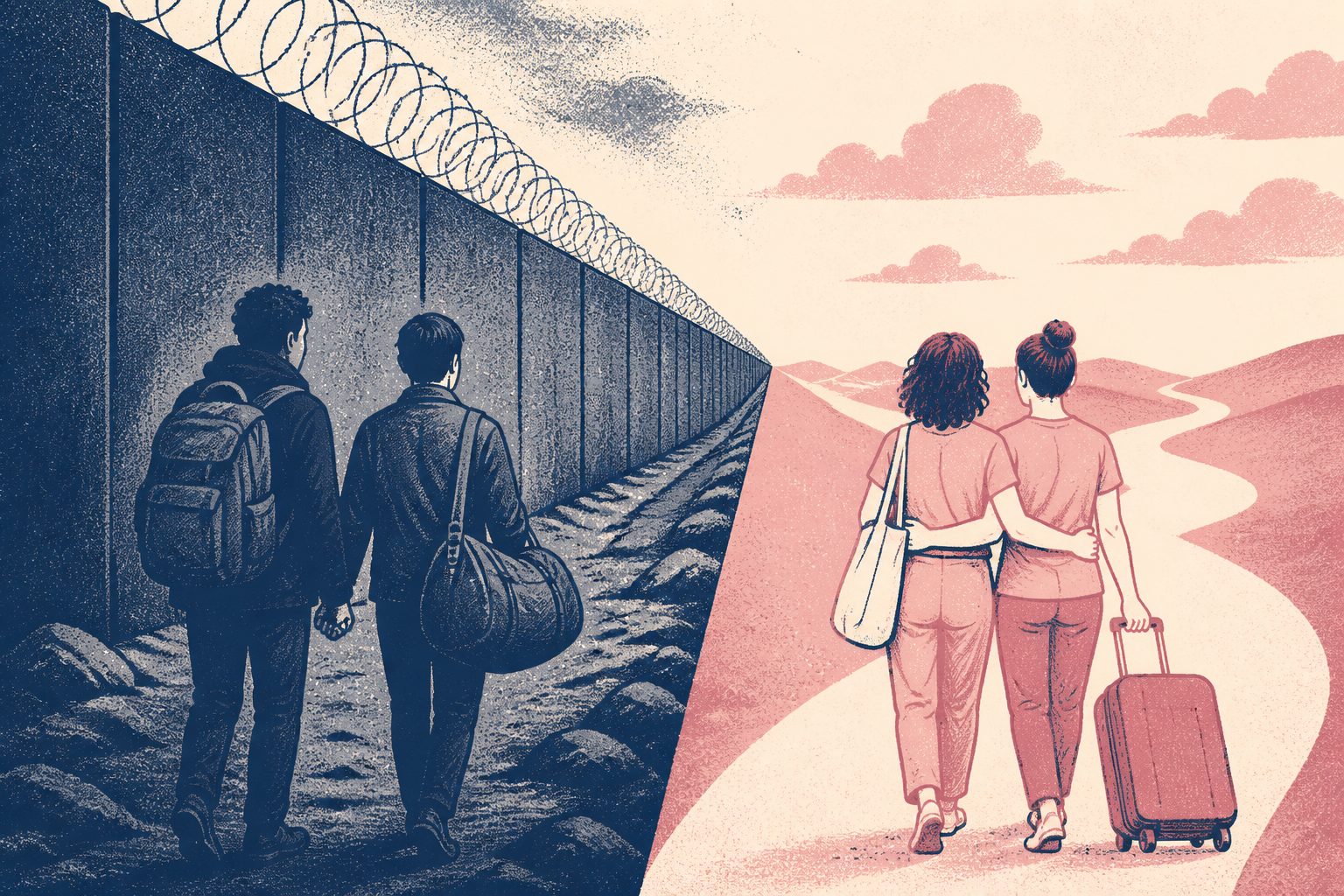
For many couples, migration offered a route to LGBTQIA+ family rights. But that route was not equally available: legal status affected whether couples could cross borders and build a recognized family life, while class shaped their ability to manage migration processes. The study also questions the common link made in research between queer couple migration and class privilege.