The predator fed and reproduced on pepper plants while broad mite and two-spotted spider mite populations declined.
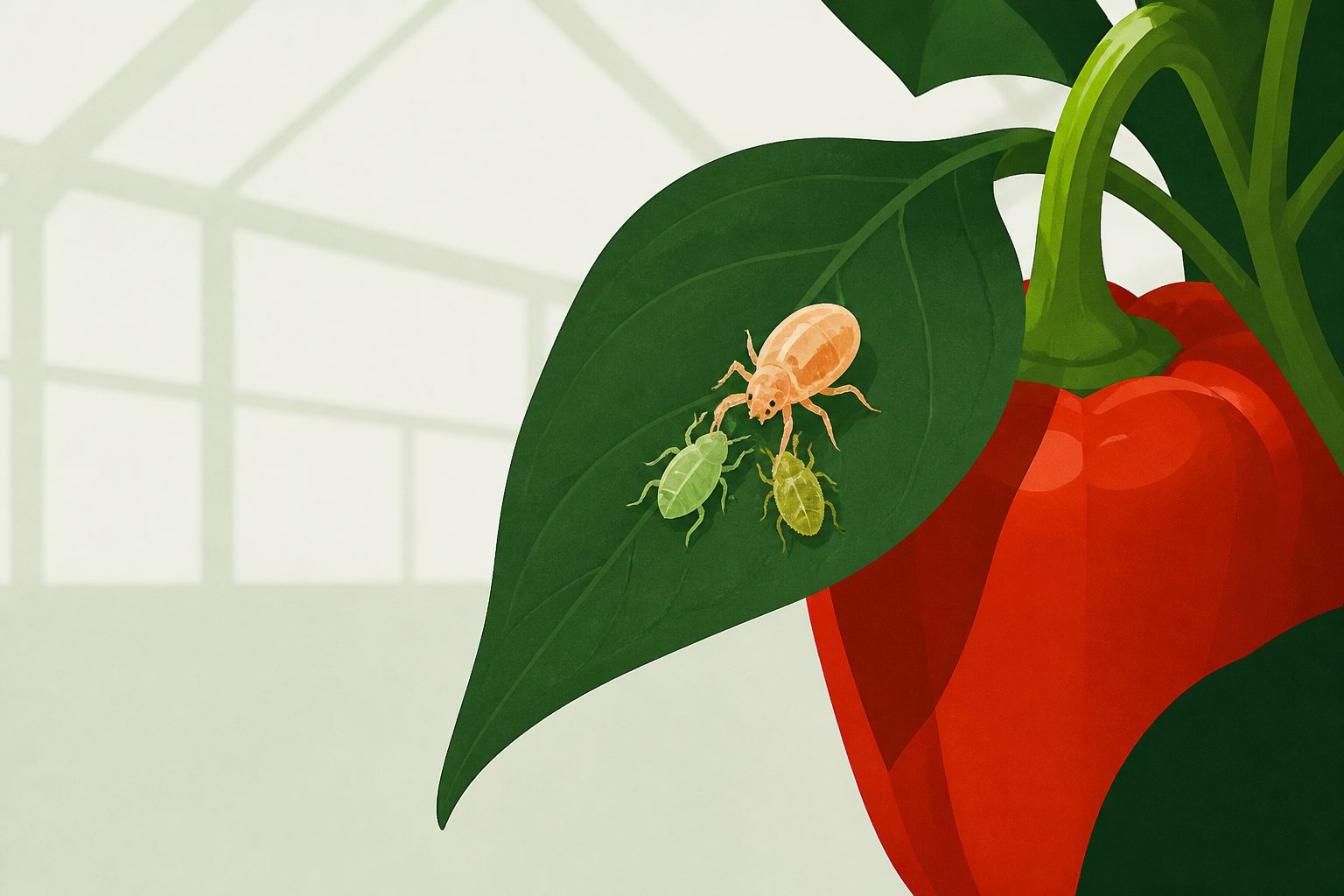
Greenhouse pepper plants can be damaged by broad mites and two-spotted spider mites. In a greenhouse study, researchers released the predatory mite Neoseiulus californicus and found that it established on pepper plants, fed and reproduced while reducing populations of both pests.
Broad mite egg numbers fell sharply in treated plots during the sampling period. The researchers say longer studies are needed to determine how pest and predator populations change through the growing season and when additional predator releases would be most useful.
What the predators did
Neoseiulus californicus successfully established on the pepper plants, fed, reproduced and reduced populations of both Polyphagotarsonemus latus, commonly called the broad mite, and Tetranychus urticae, the two-spotted spider mite. Researchers released 10,000 predatory mites—about 20 per square metre—in a randomized experiment with three replications and sampled plants at roughly two-day intervals for 14 days.
Broad mite egg density declined markedly in the release plots, reaching 0.33 ± 0.23 eggs per leaf on June 19. In plots without releases, the highest recorded density was 171.5 ± 32.6 eggs per leaf on June 8. Predator numbers changed significantly over time, with an increase evident 25 days after the first release. The abstract does not provide numerical results for the reduction in two-spotted spider mite density.