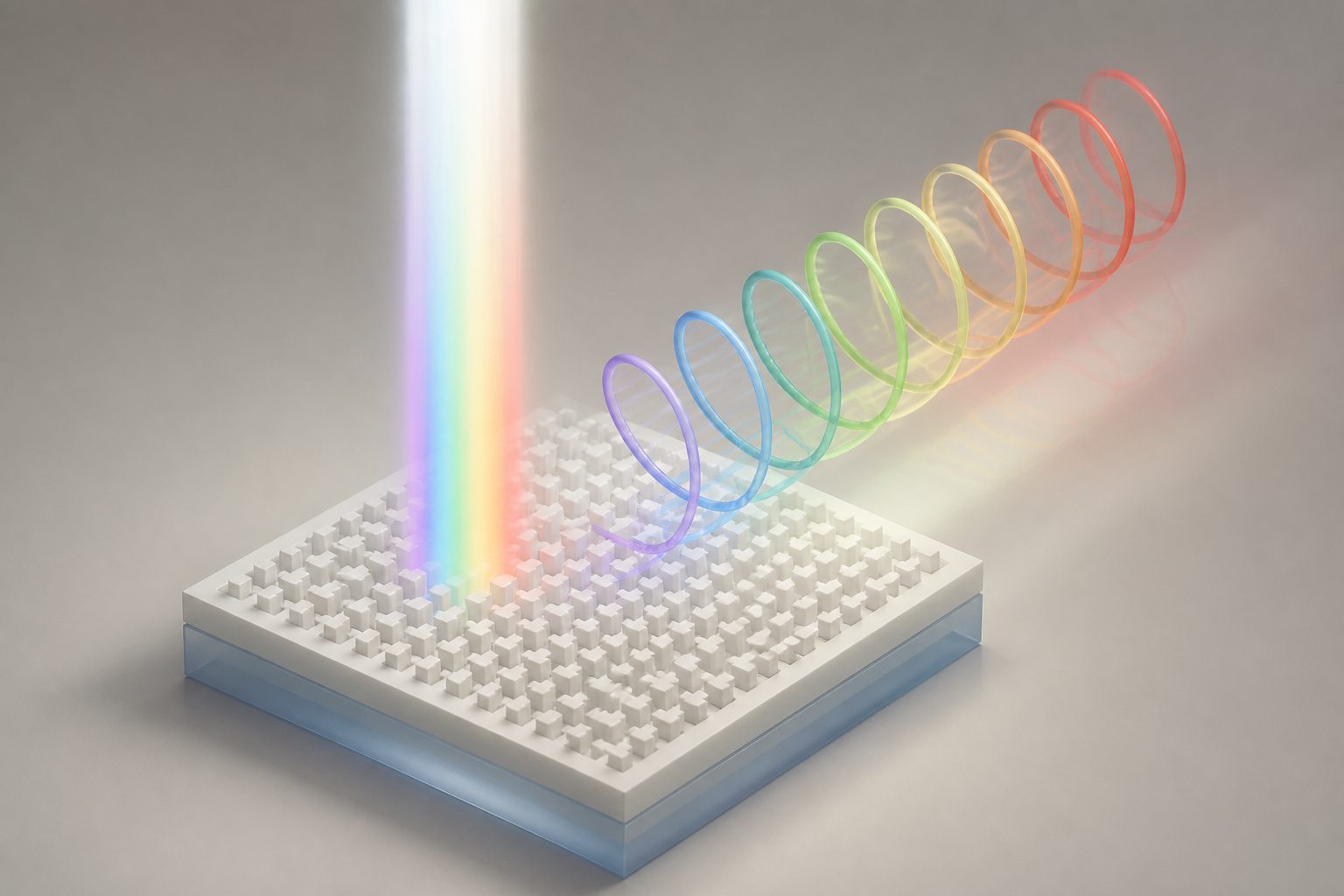
An AI-guided design process produced films and organic LEDs with strong circularly polarized emission, high color quality and adjustable color temperature.
The team developed a dual-loop active-learning system that repeatedly recommended material compositions and processing conditions, tested them experimentally and used the results to guide the next designs. One loop targeted color quality at the standard white-light coordinates, while the other targeted strong circular polarization across the visible spectrum.
The resulting films reached a color-rendering index above 90 at the coordinates (0.33, 0.33), while maintaining an absolute dissymmetry factor above 1.5 from 410 to 680 nanometers. The researchers also fabricated white circularly polarized organic light-emitting devices and adjusted their correlated color temperature to user-specified values.
What the materials achieved
The researchers report that their AI-assisted, dual-loop active-learning workflow identified material compositions and processing conditions using limited experimental runs. The resulting white-light films achieved a color-rendering index above 90 at the ideal CIE coordinates of (0.33, 0.33).
They also report an absolute luminescence dissymmetry factor, |glum|, above 1.5 across wavelengths from 410 to 680 nanometers, with the discussion describing values reaching 1.8. The workflow was used to fabricate white circularly polarized organic light-emitting devices and tune their correlated color temperature.
Why adjustable white light matters
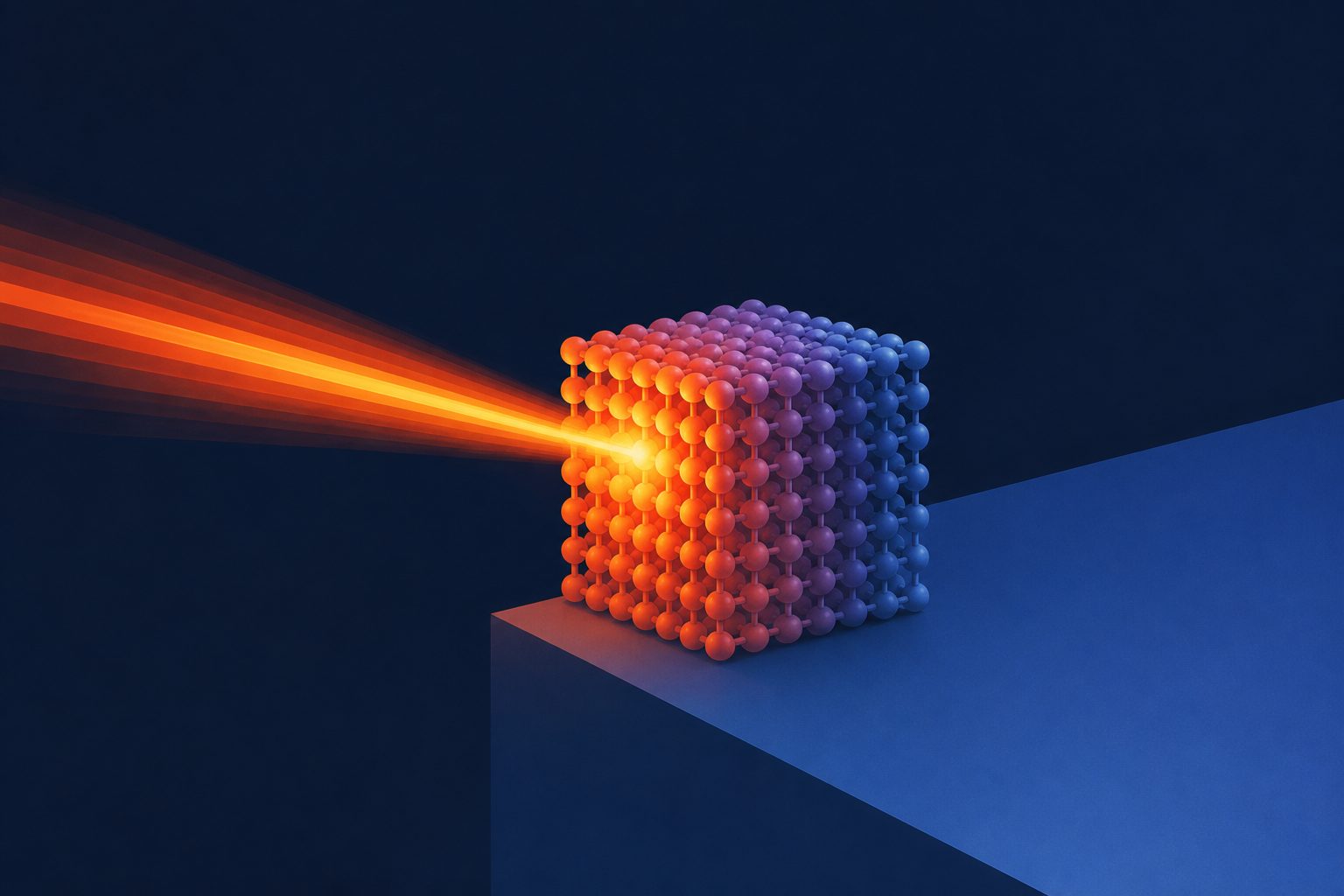
White circularly polarized luminescence requires several properties to work together: white light with accurate color rendering, strong circular polarization and consistent performance across the visible spectrum. The study shows that an active-learning workflow can search this large combination of material and processing choices while optimizing these competing goals together.
The reported films and devices point to possible uses in lighting and full-color three-dimensional displays, while the adjustable color temperature could allow the output to be tailored for different requirements. The work also presents a way to reduce the amount of experimental screening needed for this type of materials design.
Evidence and open questions
This is an experimental materials study supported by an AI-assisted, iterative design process. The researchers tested recommended compositions and processing conditions, then used the results to refine later recommendations. They report performance for films and for fabricated organic light-emitting devices.
The work is presented as a proof of concept for accelerating the optimization of circularly polarized luminescent materials. The abstract and provided excerpts do not give the number of experiments, provide detailed device-performance values or establish how the materials perform over long-term use or outside the tested designs. The approach also targets a predefined set of properties, so these results do not by themselves show that it will optimize every type of luminescent material or application.
// Source
Nature Communications · 2026 · DOI: 10.1038/s41467-026-77409-z
Authors: Peng Yang, Xiaoyue He, Hongli Zhang, Zeyu Feng, Liyang Wen, Li Wen, Yin Xu, Bo Chen, Mingjun Xiao, Xin Chen, Gang Zou
Institutions: University of Science and Technology of China