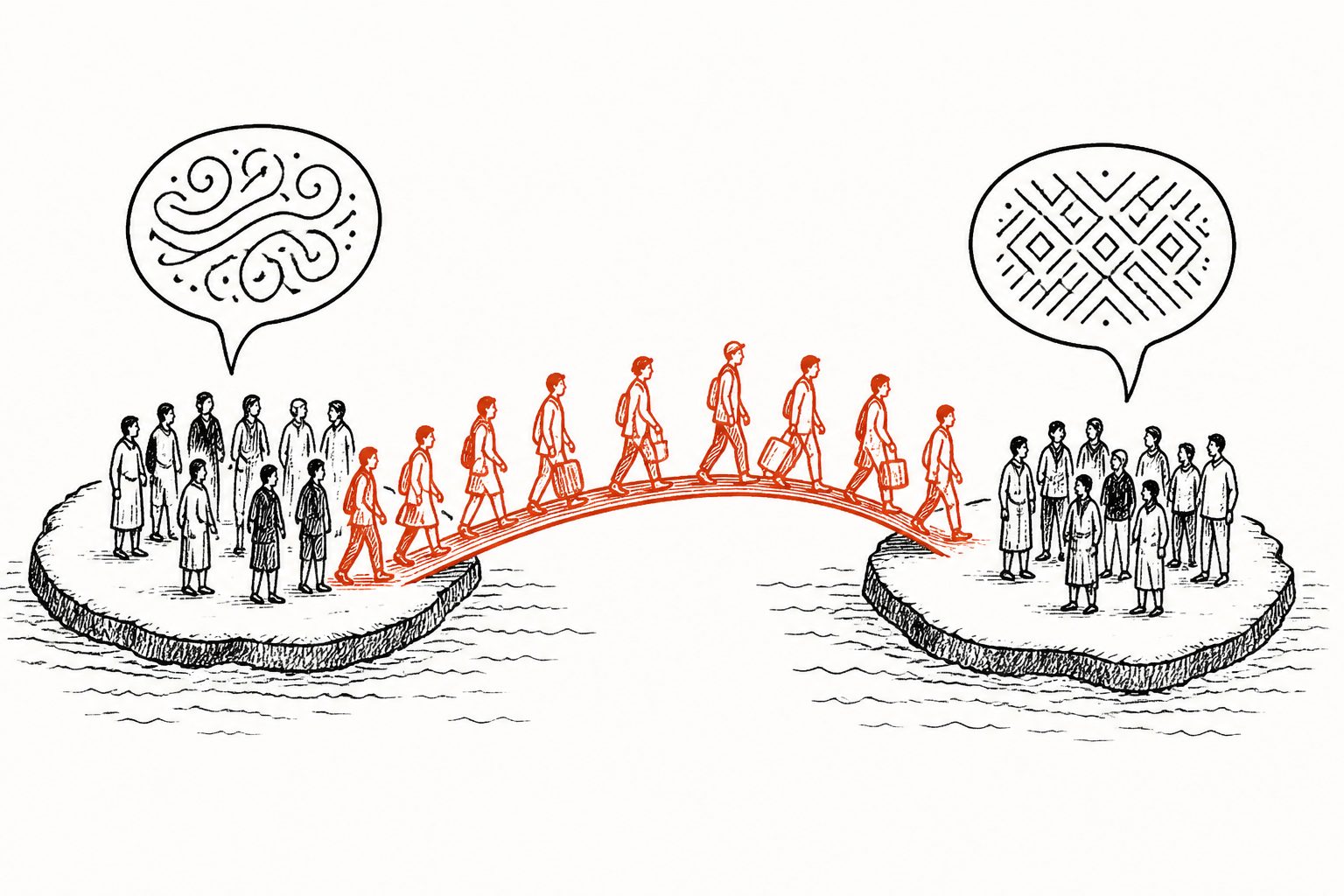
Researchers developed a simulation of two populations in which genetic and cultural traits changed together under different levels of migration and different patterns of cultural transmission. They compared unbiased transmission with conformity, in which common traits are favored, and anti-conformity, in which less common traits are favored.
Anti-conformity increased differences within and between populations across all migration levels tested. Conformity had a more variable effect: it could promote similarity when weak relative to migration, but could sustain or increase differences when strong enough. The balance between migration and conformity determined whether populations converged, diverged or retained structured variation.