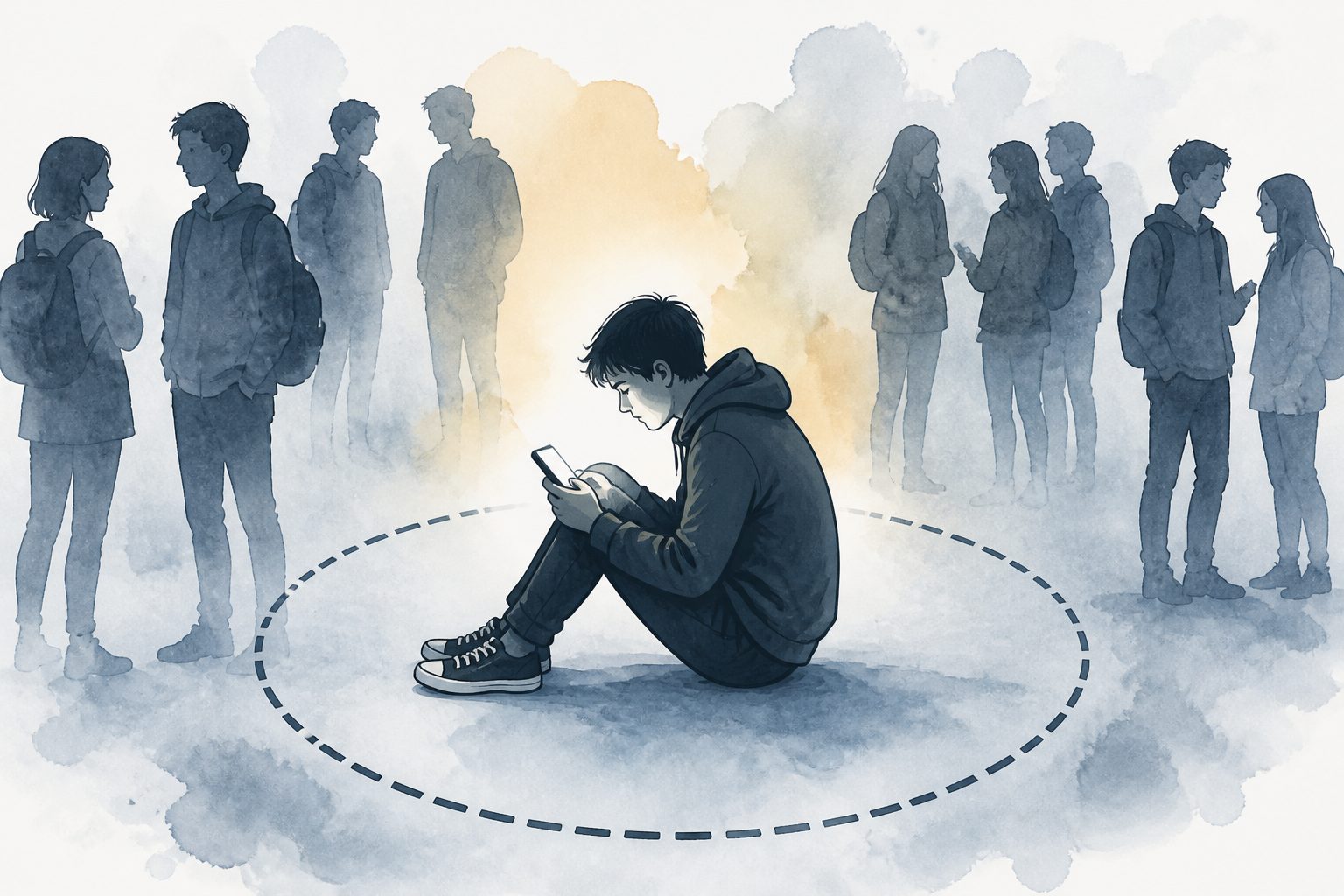
A study of 1,439 young people found that social isolation was associated with higher odds of risky or pathological social media use.
Researchers analyzed data from 1,439 people aged 11 to 21 who took part in waves of the population-based COPSY study in 2024 and 2025. At the second wave, 21.6% reported using social media intensely, defined as at least four hours a day.
Using a parent-report screening tool based on the World Health Organization’s disease classification, the researchers identified at-risk and pathological social media use. They then examined how these outcomes were associated with social, psychological and behavioral factors across the two waves.
What the study found
At the 2025 assessment, 23.6% of participants met the study’s cut-off for at-risk social media use and 4.9% met the cut-off for pathological use. For the analyses, these two groups were combined as problematic social media use.
Compared with young people who did not use social media intensely, those who did so in 2025 had higher odds of problematic use. Intense use in 2024 alone was also associated with higher odds. Increases in social exclusion or feeling devalued between 2024 and 2025, as well as loneliness reported in 2024, were linked to higher odds of problematic use.
Greater family cohesion in 2024, more physical activity in 2025 and better sleep quality in 2025 were associated with lower odds. These findings describe links between the factors and problematic social media use; they do not show that any one factor caused it.
Evidence and caveats
The study used data from two waves of the German population-based COPSY study, collected in 2024 and 2025, and included 1,439 young people aged 11–21. Problematic social media use was assessed at the second wave with SOMEDIS-P, an ICD-11-based parent-report screening instrument.
The analysis was observational, so it cannot establish cause and effect. For example, the data cannot show whether loneliness contributed to problematic social media use, whether problematic use increased loneliness, or whether both were influenced by other factors. The findings also come from young people in Germany and may not apply to other populations. The abstract does not provide further information about the sample’s representativeness, participation rates or the accuracy of the screening measure.