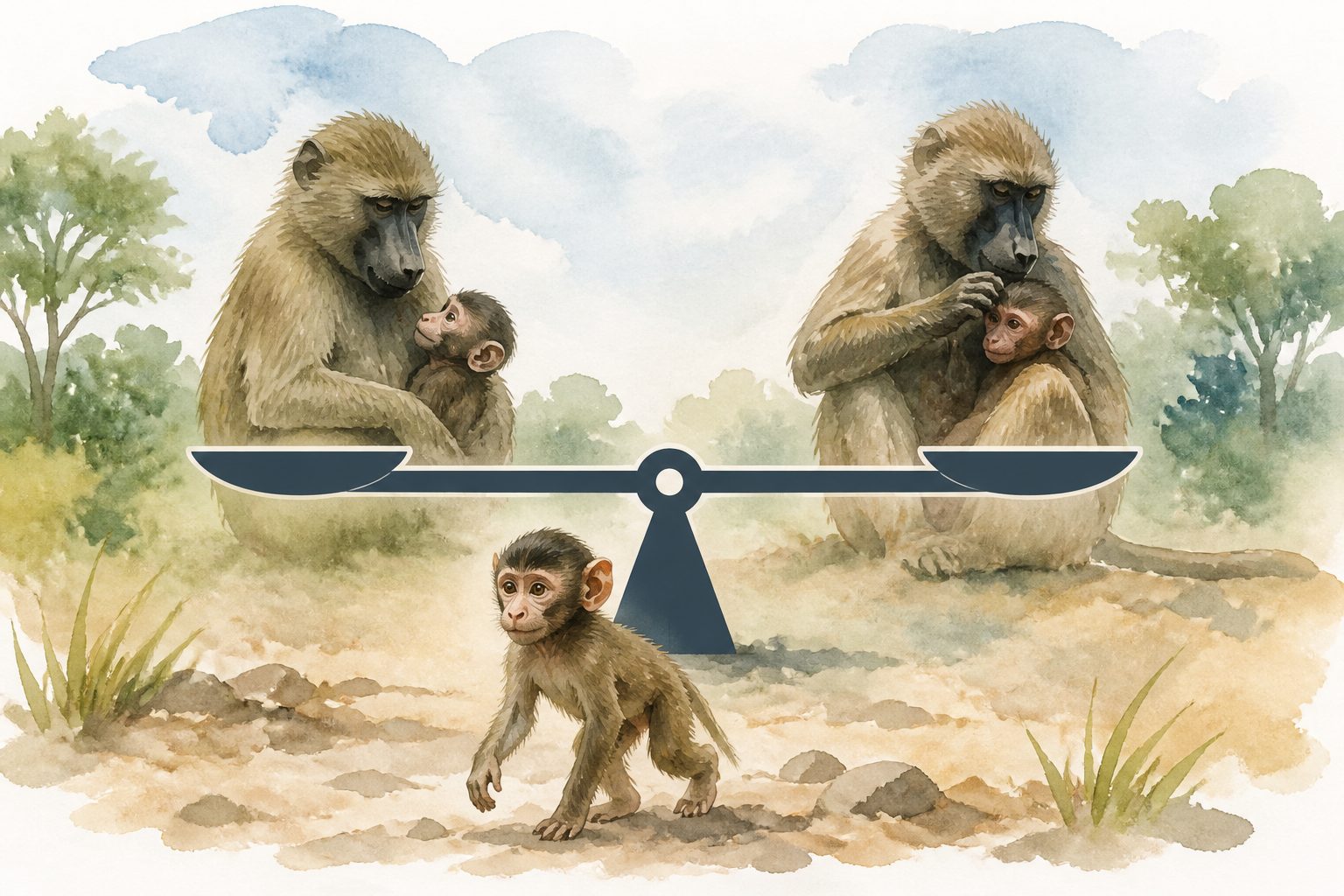
A study of wild baboon infants found no evidence that differences in mothers’ caregiving styles affected how infants grew or survived.
Researchers studied maternal behaviour and infant outcomes in a population of wild Guinea baboons, a species with a tolerant social system in which females leave their birth groups. They assessed maternal style in 80 infants and examined whether it was associated with growth or survival.
The analysis found only moderate differences among mothers and no evidence that maternal style predicted either outcome. Infant sex, maternal age and changes in plant greenness—a measure that proved to be a poor indicator of food availability—also did not predict growth or survival.
Evidence and caveats
This was a field study of wild Guinea baboons, using data from 80 infants and separate samples for growth and survival analyses. The researchers used a statistical framework designed to account for changes in maternal behaviour as infants aged. The study found no evidence of a link, but maternal styles varied only moderately, which may limit the ability to detect effects. The plant-greenness measure was later found to be a poor indicator of food availability, and the study did not resolve how infants’ behaviour and mothers’ responses shape early social development. The researchers also propose, rather than demonstrate, that disease and predation may be more important influences on growth and survival in this setting.