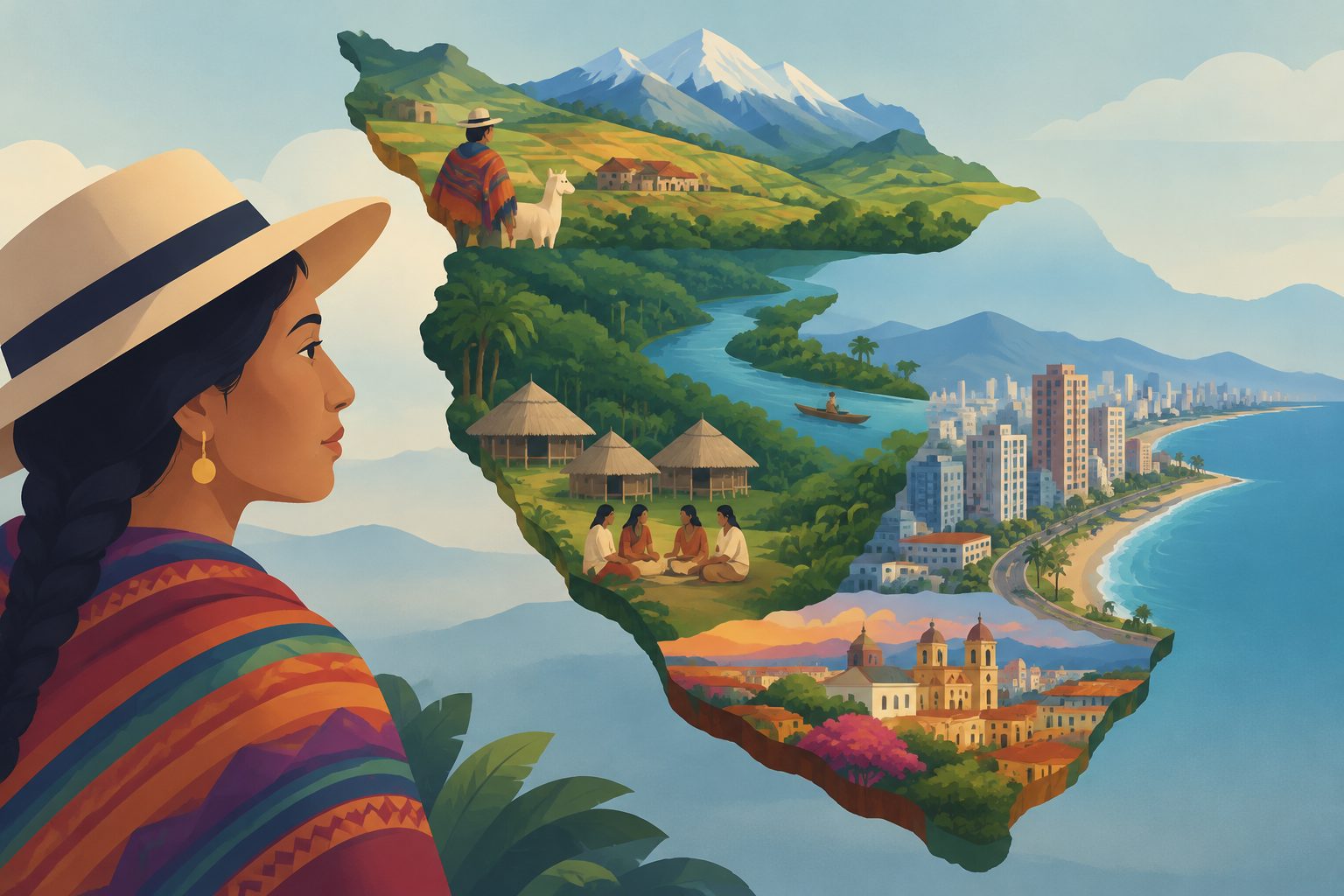
The article contrasts imposed state, corporate and para-state borders with bottom-up efforts to protect autonomy and coexistence.
The article examines the tension between “borderisation” — the imposition of territorial limits by states, corporations and para-state forces — and multi- or transterritoriality, in which several territories and worlds coexist or overlap.
From a decolonial perspective, it presents the multiplicity of territory as a tool of struggle and “re-existence,” meaning the construction of an alternative mode of existence. It also considers bottom-up boundaries that seek to support autonomy and security for groups affected by dominant territorial arrangements.
Many worlds, imposed borders
The article argues that territory in the Latin American context should be understood in an integrative way, including both imposed constraints and social practices of resistance. It links borderisation to the internal and external coloniality of power, expressed through corporate, state and para-state control. In contrast, multi- or transterritoriality treats territory as multiple and overlapping, allowing different worlds to coexist. The article also identifies bottom-up boundaries as a means by which subalternised groups pursue decolonised security and autonomy.
// Source
Transactions of the Institute of British Geographers · 2026 · DOI: 10.1111/tran.70097
Authors: Rogério Haesbaert
Institutions: Universidade Federal Fluminense