How AI agents could tackle software work without leaving humans out
A research roadmap proposes separate spaces for people and AI agents to coordinate, review decisions and handle difficult trade-offs.
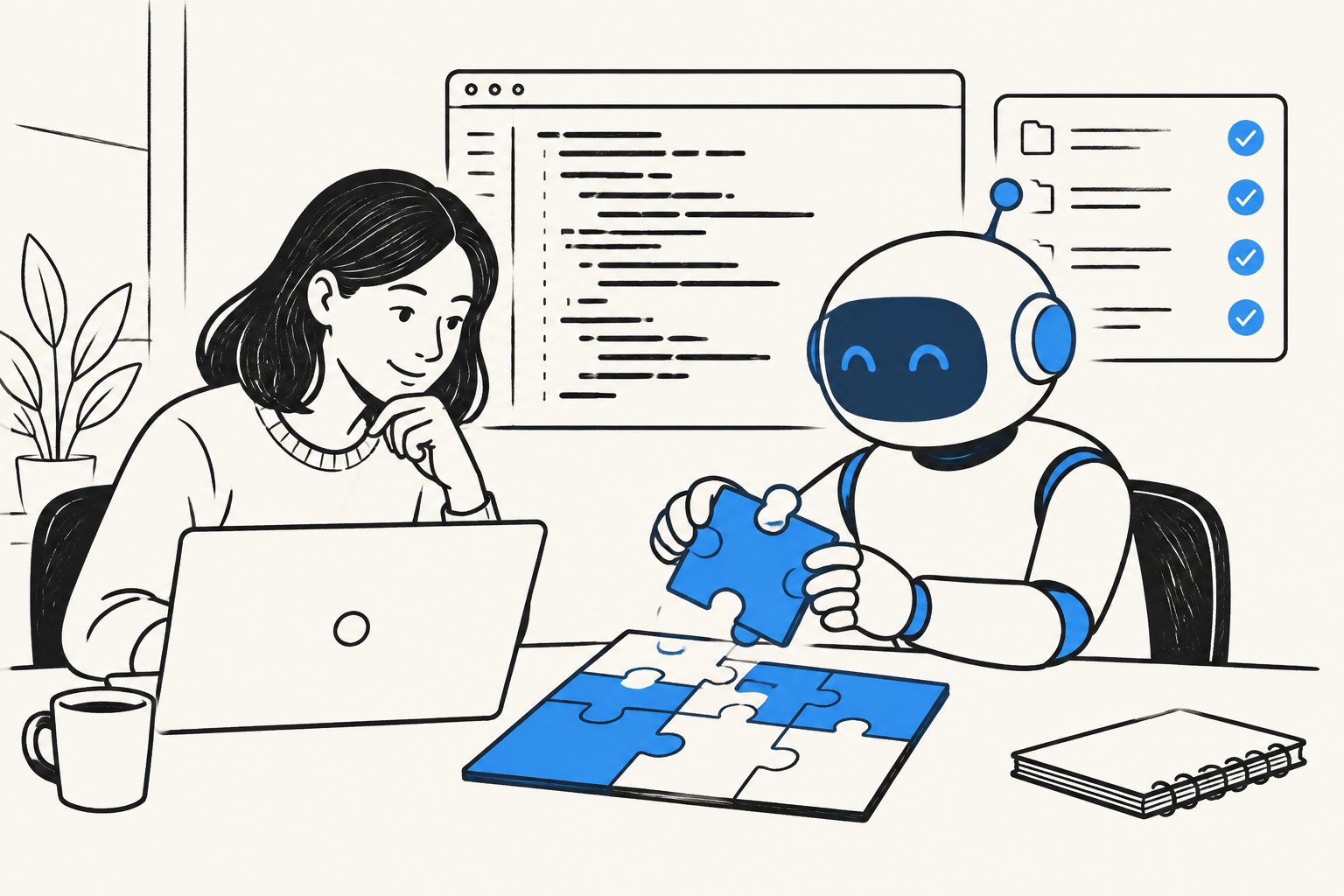
Editorial illustration — not from the study.
The paper describes “Structured Agentic Software Engineering,” a conceptual framework for software work involving teams of people and AI agents. It separates the field into software engineering for humans, where people set goals and mentor agents, and software engineering for agents, where agents carry out tasks in a structured setting.
The proposed design includes an Agent Command Environment for human coordination and an Agent Execution Environment where agents work and can ask people for help when they encounter ambiguity or difficult trade-offs. The authors also outline a research roadmap and discuss how software engineering education may need to change as human roles shift toward coaching and orchestration.
A plan for human-agent teams
The paper identifies a spectrum between workflow agents, which follow plans encoded by human developers, and autonomous agents, which can plan and choose tools from a high-level goal. It argues that this distinction matters for how software systems are built and maintained.
Its main proposal is a framework with two linked modes of work. In the human-focused mode, people provide intent, strategy, oversight and mentorship. In the agent-focused mode, several agents operate through structured processes. The proposed human environment, called the Agent Command Environment, would collect agent events such as merge-readiness and consultation requests. The Agent Execution Environment would let agents perform tasks and initiate human callbacks or handovers.
The paper also proposes version-controlled artifacts, including briefing, orchestration, mentoring, consultation and merge-readiness records. These are intended to make instructions, decisions, validation steps and unresolved conflicts easier to track. The authors present these ideas as a scaffold for research and discussion, not as a completed engineering method.
Why coordination matters
The framework addresses a central challenge identified by the authors: AI agents may complete software tasks quickly, but their output can still require substantial human checking for regressions, superficial fixes and other quality problems. Structured handovers and traceable decisions could give teams a clearer way to oversee agent work as the number of agents and tasks grows.
The proposal also changes the expected role of software engineers. Rather than focusing mainly on direct implementation, people would decide when an agent needs detailed guidance, when it can work independently and when human judgment is needed. The paper links this role to strategic, contextual and ethical decisions that agents may not handle reliably on their own.
What the paper shows
This is a conceptual article and research roadmap, not a controlled experiment or a demonstration showing that the proposed environments improve software quality, productivity or trust. The paper uses distinctions, design proposals and illustrative examples to organize the field, but the excerpts do not report performance measurements or validation of the framework in deployed projects.
The authors explicitly say that Structured Agentic Software Engineering is not a definitive solution and needs community discussion and refinement. The usefulness of its environments, records and processes therefore remains an open research question. The paper also acknowledges that the right balance between structured guidance and agent autonomy may depend on the task, available data and the need for human judgment.
// Source
ACM Transactions on Software Engineering and Methodology · 2026 · DOI: 10.1145/3861334
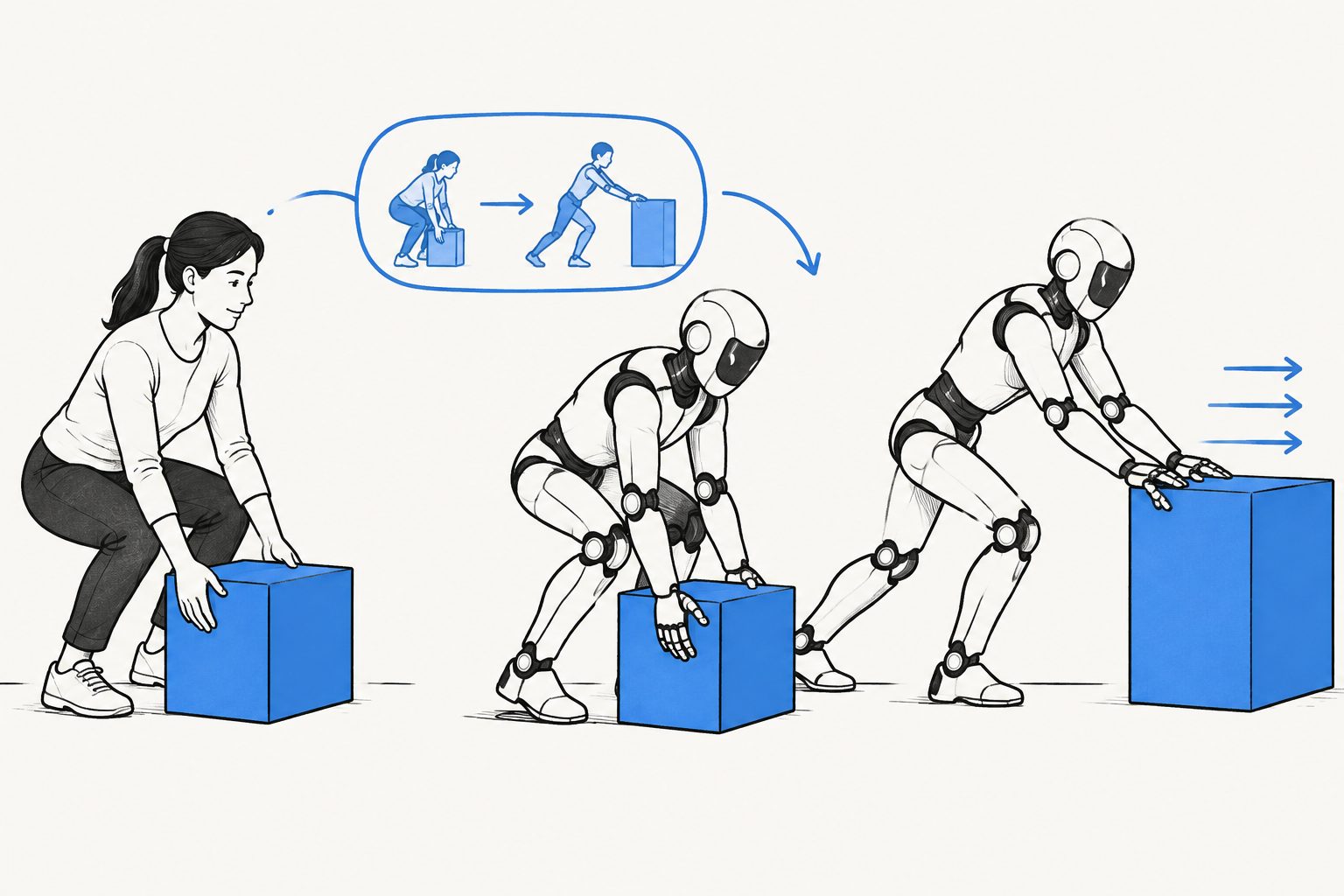
Researchers developed an AI system that helps humanoid robots learn interactive tasks from reference human movements. In tests involving picking up and pushing boxes, it achieved higher tracking accuracy and task success than recent comparison systems, including on a real Unitree G1 robot.
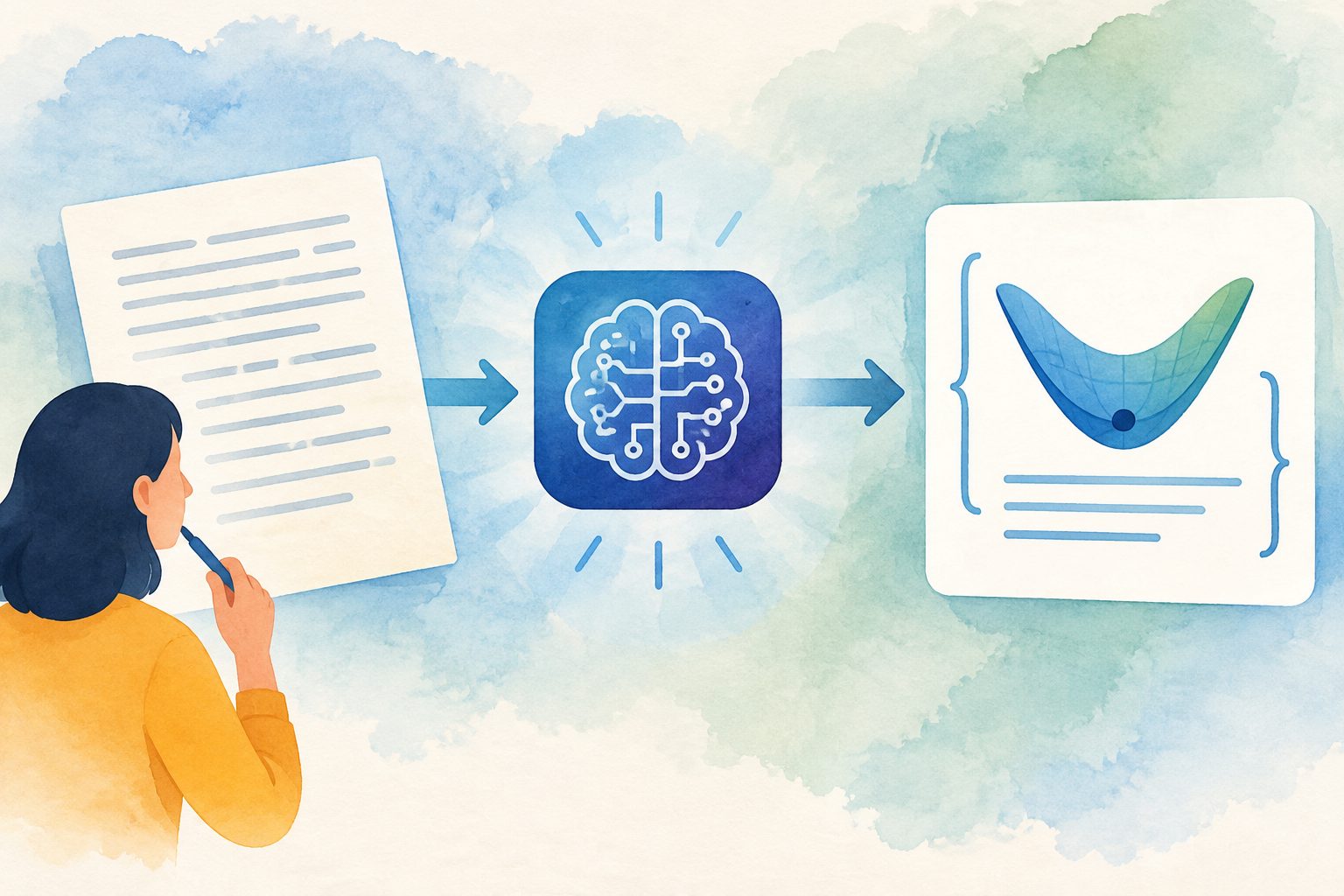
Researchers developed an AI-based system that converts ordinary-language descriptions of decision problems into mixed-integer linear programming models. In tests on 30 problems, it produced correct models for 29 and correctly generated 176 of 177 mathematical expressions.
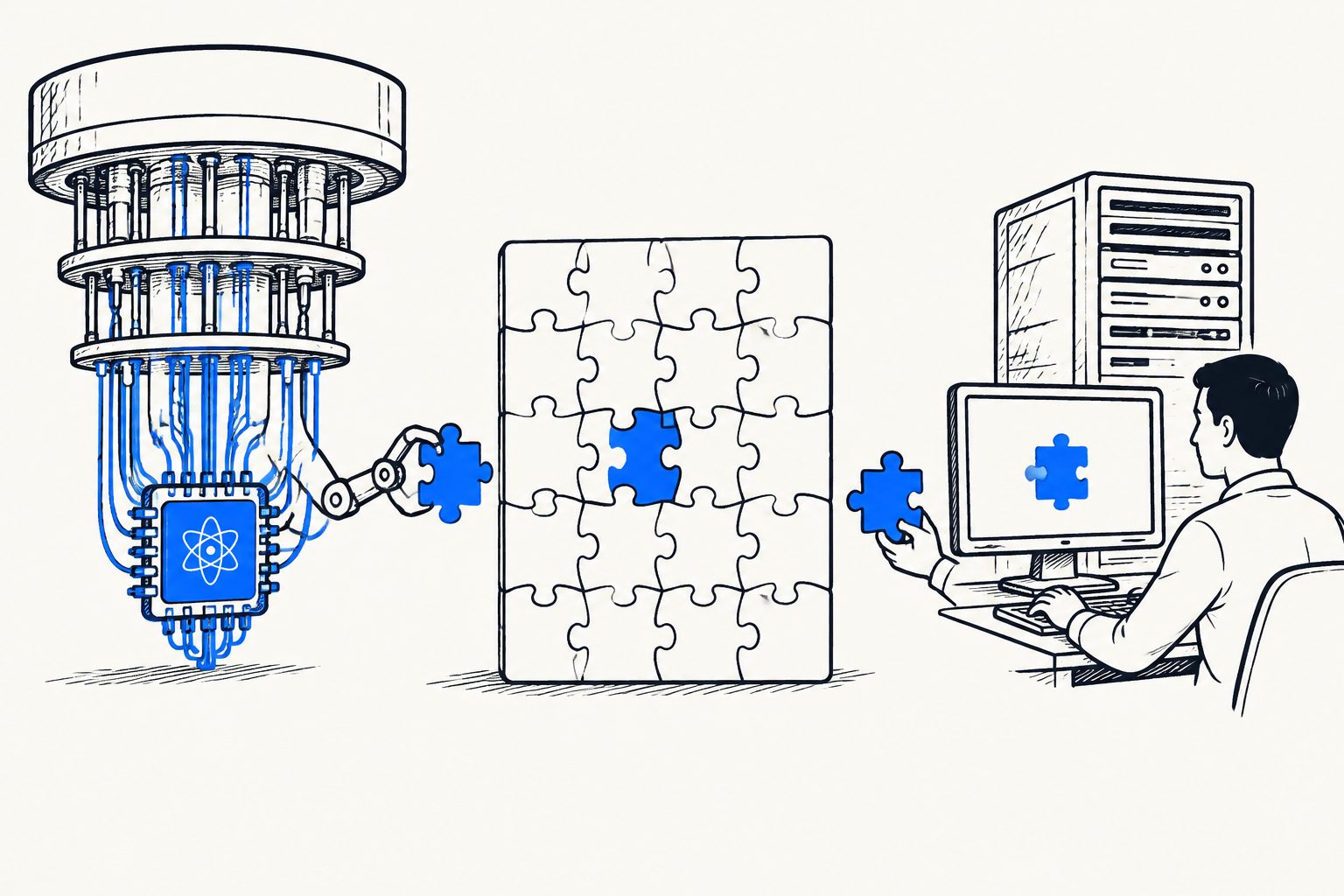
Researchers used IBM quantum hardware to recover the best solutions to graph-based optimization problems with up to 117 decision variables. The results suggest favorable scaling compared with the tested classical sampling methods, but the same instances were efficiently solved by a classical optimization program.