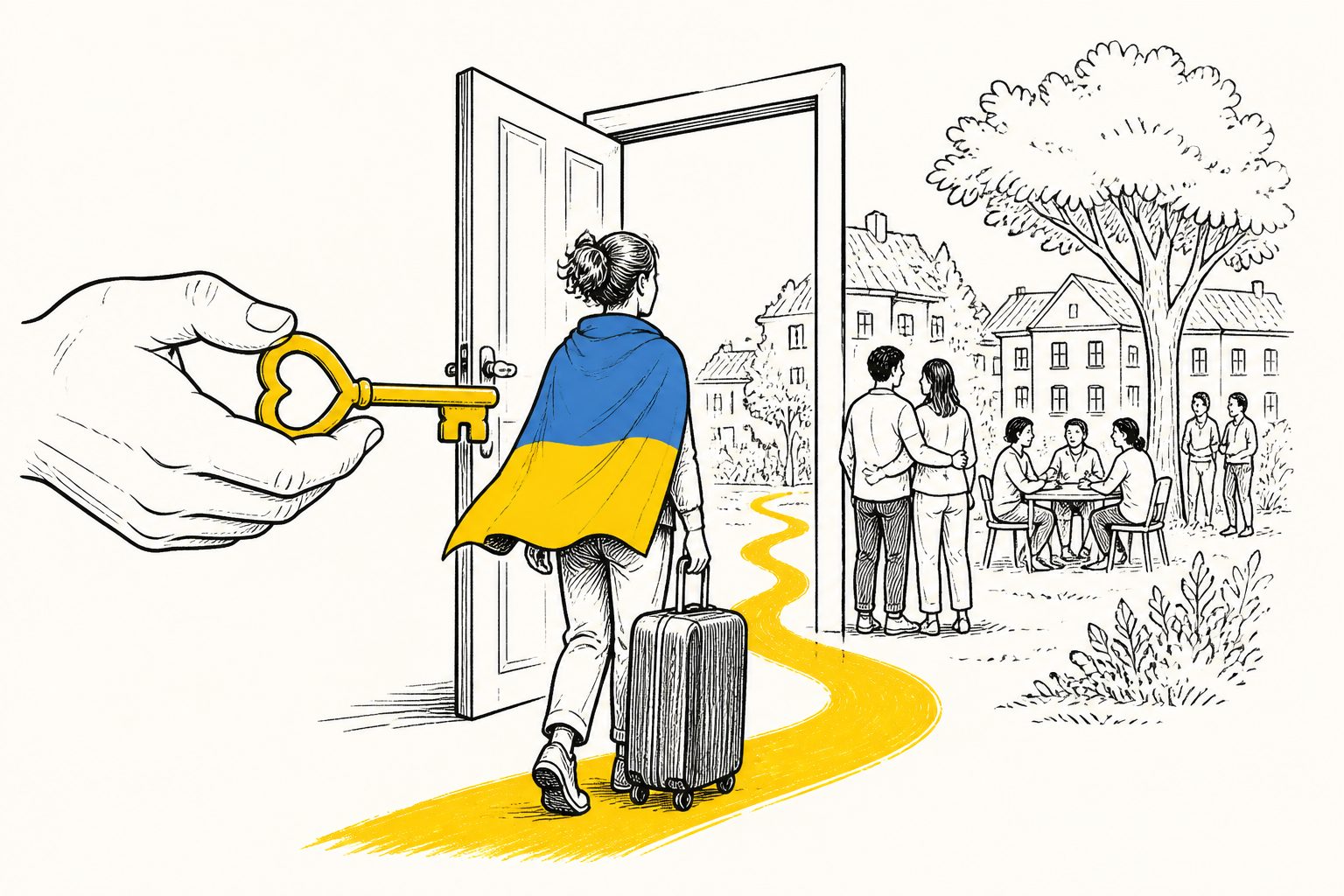
Recognition of same-sex relationships mattered less for initial escape routes than for family security and belonging over time.
The study draws on interviews with LGBTQI+ Ukrainians who received temporary protection in EU member states, focusing on queer women and trans people who migrated with partners or children. It compares Austria and Germany, where same-sex relationships are legally recognised, with Poland and Slovakia, where they are not.
Existing social networks, safety and practical concerns usually shaped initial destinations. Over time, participants in countries with legal recognition described greater social legitimacy, institutional recognition and family security. Participants in Poland and Slovakia reported concealing relationships, greater economic precarity and continuing fears of discrimination.
Recognition and settlement
Legal recognition rarely determined participants’ initial destination. Instead, existing social networks, safety and practical considerations were more influential. Recognition became increasingly important for long-term settlement: in Austria and Germany, it supported social legitimacy, institutional recognition and family security. In Poland and Slovakia, participants described pressure to conceal relationships, greater economic precarity and persistent fears of discrimination despite receiving temporary protection.
The study also identifies difficulties for mixed-nationality couples, trans people and polyamorous families. Their experiences exposed limits in current refugee and family-migration rules, especially when legal definitions of family do not reflect their relationships.
// Source
Journal of Ethnic and Migration Studies · 2026 · DOI: 10.1080/1369183x.2026.2708446
View paper (DOI)Published 2026-08-31 Authors: Maryna Shevtsova
Institutions: KU Leuven