A study in Sikkim documents how seasonal changes in plants, animals, insects, water and sounds guide traditional agricultural work.
Researchers documented the traditional agroecological calendar of the Lepcha community in Lepcha-dominated areas of Pakyong district, Sikkim. The calendar contains 12 months organized around ecological rhythms rather than fixed dates.
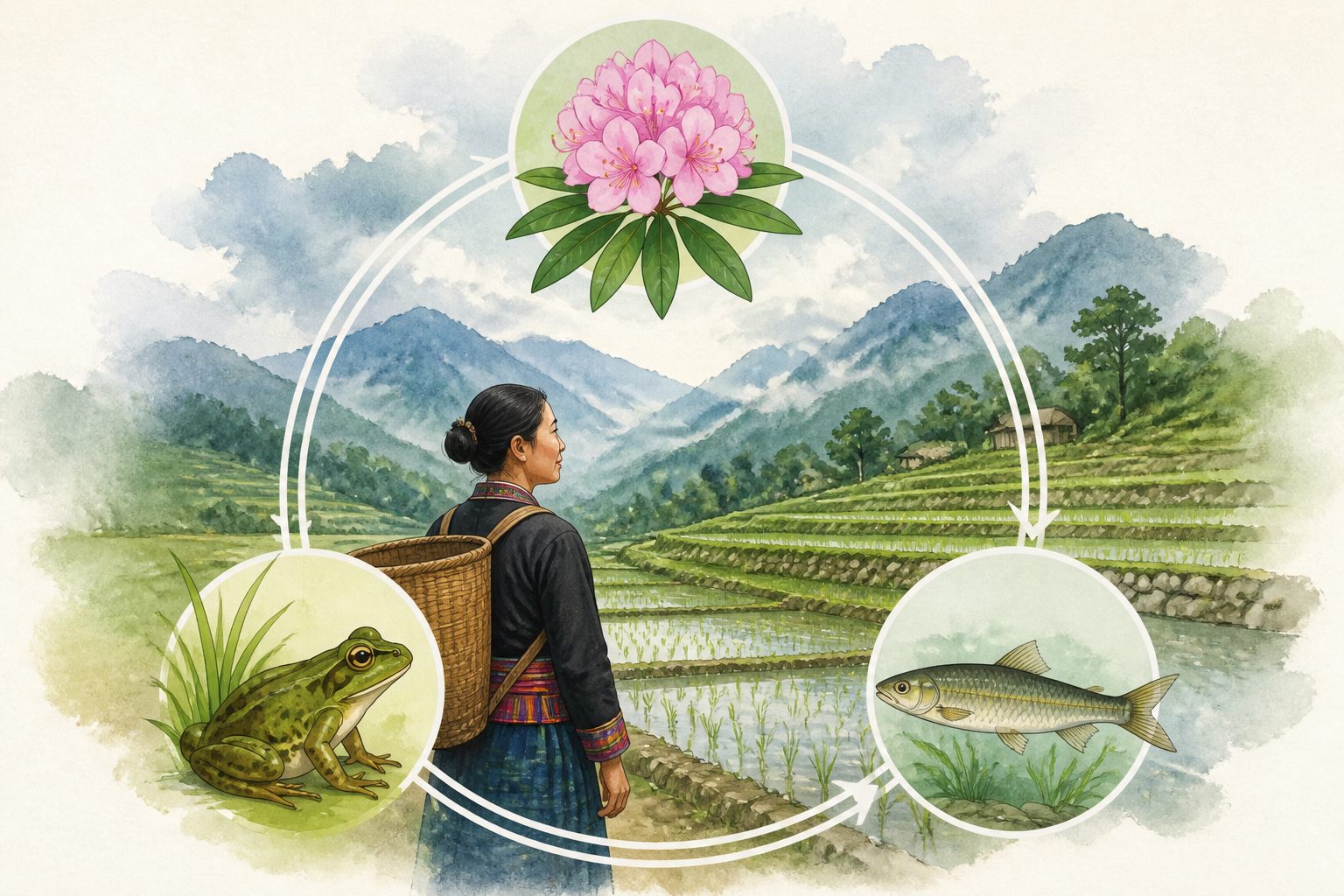
Seasonal activities are guided by observations including the flowering of several plants, migratory birds, cicada choruses, frog breeding calls, dragonfly activity, moth swarming, fish movements, atmospheric conditions, changes in water and other local sounds. These signs help align sowing, harvesting, food gathering, mushroom collection, honey harvesting and tuber extraction with seasonal conditions.
Plants, animals and sounds
The study documented 12 traditional Lepcha months synchronized with ecological changes. Important plant indicators included the flowering of Bombax ceiba, Rhododendron arboreum, Clerodendrum infortunatum, Rosa macrophylla, Luculia gratissima and Erythrina arborescens.
Other indicators included migratory bird behaviour, cicada choruses, frog breeding calls, dragonfly activity, moth swarming, fish migration, atmospheric conditions, hydrological changes and indigenous acoustic cues. Lepcha agricultural and gathering practices were closely synchronized with these signs and with seasonal environmental conditions.
Why this knowledge matters
The findings show how Lepcha ecological knowledge connects plants, animals, insects, sounds, water and farming activities into a single seasonal system. The researchers say documenting this knowledge is important as socio-cultural change, biodiversity loss and climate change affect indigenous practices, cultural preservation and the management of mountain agroecosystems in the Eastern Himalaya.
Evidence and limits
The study is a field-based documentation of traditional knowledge, conducted in 2024 in Lepcha-dominated areas of Pakyong district, Sikkim. Researchers used unstructured interviews, participant observations and focused group discussions with community elders and local practitioners.
The abstract does not give the number of participants or assess how accurately each indicator predicts weather, ecological events or agricultural outcomes. The findings describe knowledge and practices in the study area; they do not establish that the calendar is used by all Lepcha communities or that every indicator works consistently under changing conditions.