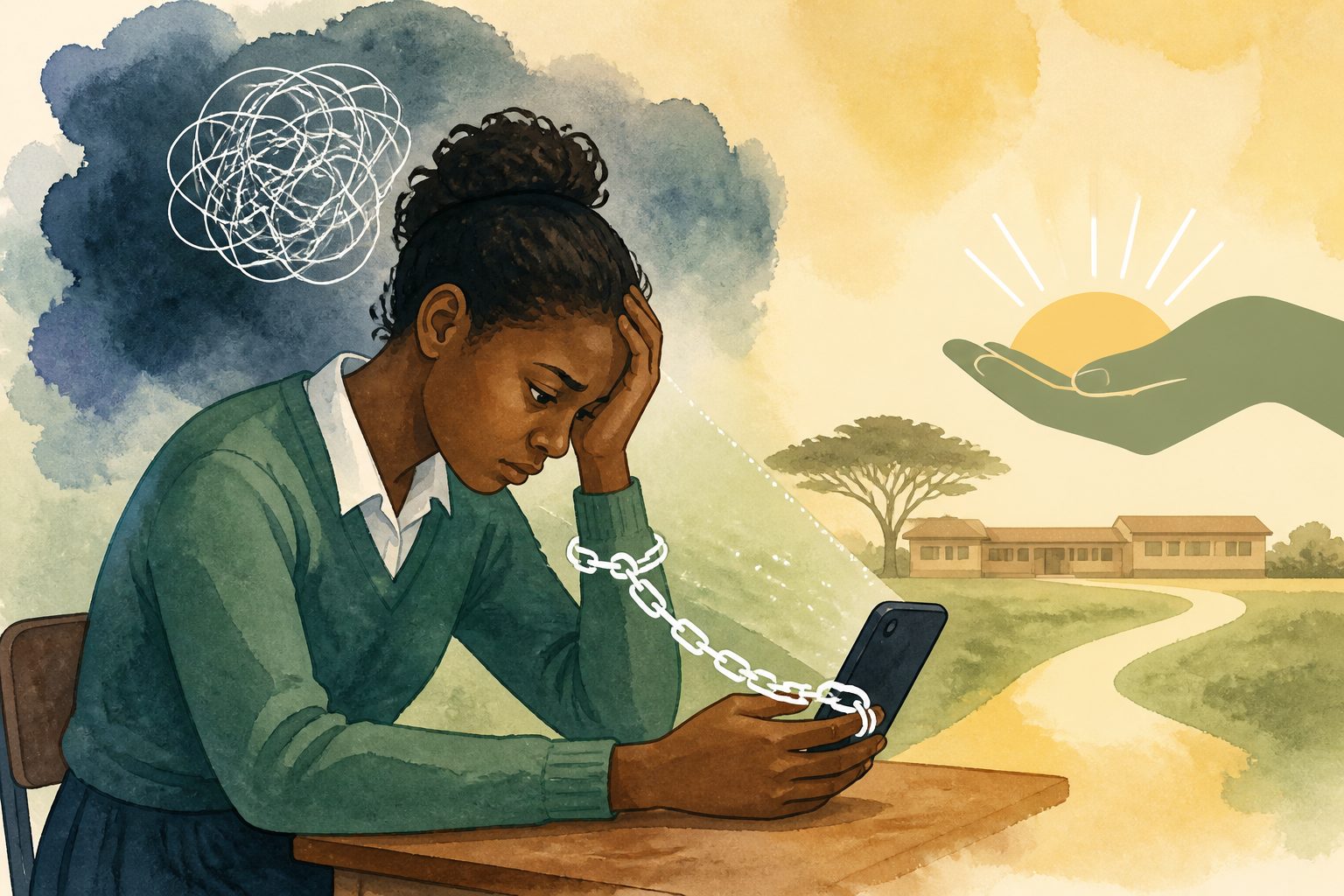
The article reviews international studies on nomophobia and problematic smartphone use and connects the findings to Ethiopia’s growing smartphone access among secondary students. It focuses on mental health outcomes such as anxiety and depressive symptoms, along with sleep disturbances and changes in emotional regulation and academic engagement.
The authors argue that Ethiopia currently lacks school-based digital wellbeing frameworks, standardized screening, and comprehensive policies to address technology-related behavioral risks for adolescents. They propose steps including digital wellbeing education in secondary curricula, stronger school counseling, better parental guidance on digital literacy, and national guidelines for responsible smartphone use.