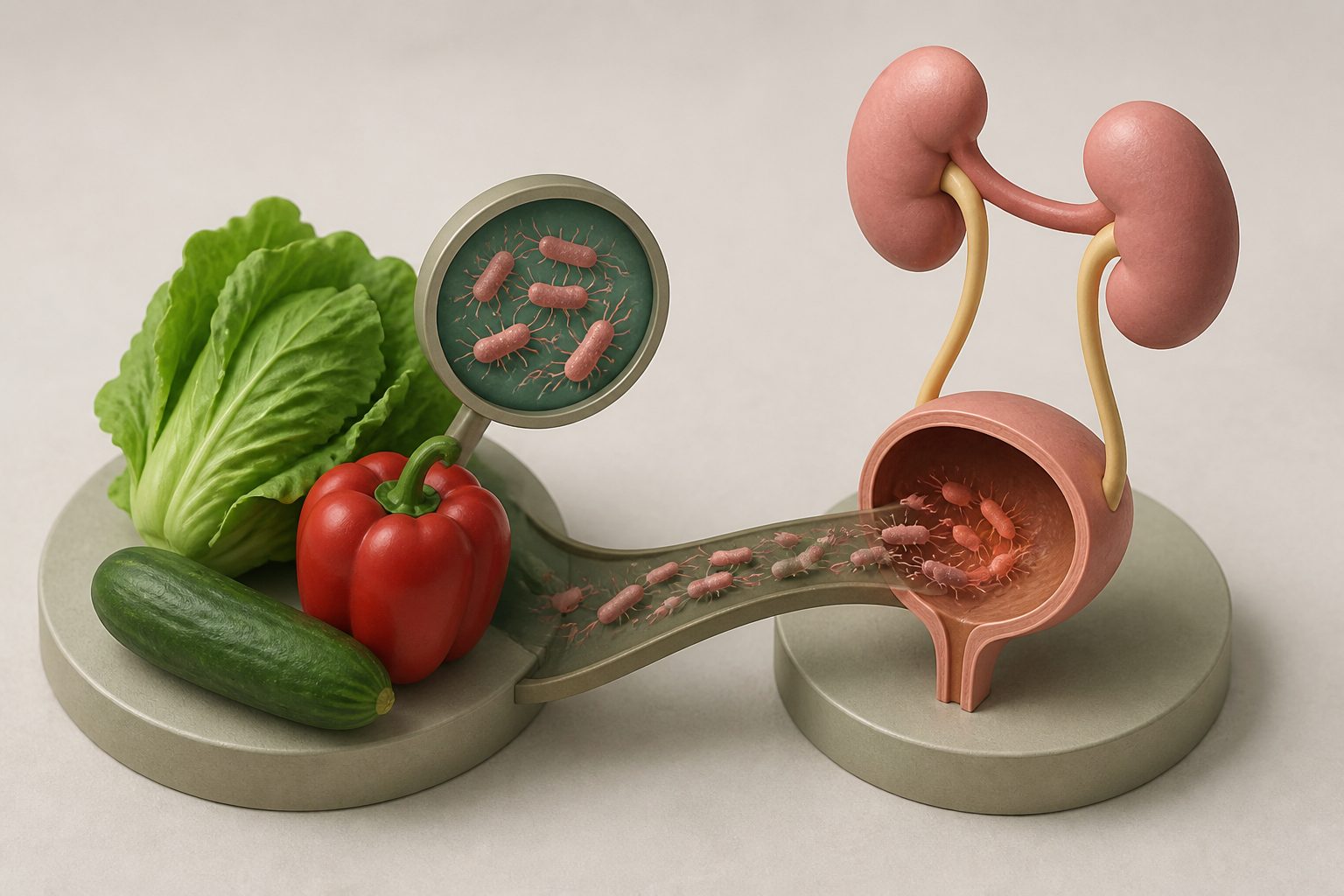
In southern Brazil, vegetable isolates shared genetic lineages and resistance features with bacteria from community-acquired urinary infections.
Researchers analyzed 310 Proteus mirabilis isolates: 110 from retail vegetables and 200 from community-acquired urinary tract infections in southern Brazil. They compared the isolates’ antibiotic-resistance genes, virulence traits, biofilm formation and genetic relationships.
Vegetable and clinical isolates included shared sequence types, including the high-risk ST773 lineage, as well as ST135 and ST336. Some isolates had indistinguishable genetic profiles, and the study also characterized genetic regions surrounding the resistance gene blaKPC-2 in vegetable isolates.
Shared resistance and lineages
Multidrug resistance was found in 36.6–42.0% of vegetable isolates and 16.0% of urinary infection isolates. Extended-spectrum beta-lactamase production occurred in 32.0% of the vegetable group, and the carbapenemase gene blaKPC-2 was detected in vegetable isolates.
Other resistance genes, including blaCTX-M variants, fosA3 and qnrD, were widely distributed. All isolates carried combinations of virulence genes, particularly those linked to fimbriae, proteases and iron acquisition, and showed strong or very strong biofilm formation. Genetic analysis found close relationships between vegetable and clinical isolates, including indistinguishable profiles and shared sequence types such as ST773, ST135 and ST336.
A possible food reservoir
The findings suggest that retail vegetables can carry Proteus mirabilis lineages with traits associated with antibiotic resistance and infection, including lineages also found among human urinary tract infection isolates. This supports closer attention to food-associated bacteria within a One Health approach, which considers human, animal and environmental health together.
The study does not show that eating contaminated vegetables caused any infection. Its importance is that it identifies a possible, and potentially overlooked, reservoir of resistant and virulent bacteria connected to human clinical lineages.
What the study shows
This was a laboratory and genomic epidemiology study of bacterial isolates collected from retail vegetables and community-acquired urinary tract infections in southern Brazil. The researchers compared resistance genes, virulence profiles, biofilm-forming ability and genetic relatedness, including whole-genome sequencing of selected isolates.
The close genetic relationships do not by themselves establish transmission between vegetables and people or identify how the bacteria moved between settings. The findings also come from the sampled isolates and region, so they may not represent all retail vegetables, clinical infections or Proteus mirabilis populations elsewhere.
// Source
Folia Microbiologica · 2026 · DOI: 10.1007/s12223-026-01594-z
Authors: Luana Carvalho Silva, Gustavo Henrique Migliorini Guidone, Bruno Henrique Dias de Oliva, Arthur Bossi do Nascimento, Nathalia Geovana Nascimento Santos, Beatriz Lernic Schoeps, Bianca Mayumi Susuki, Bruna Larissa Covezzi, Luana Karolyne Salomão de Almeida, Eliana Carolina Vespero, Sergio Paulo Dejato da Rocha
Institutions: Universidade Estadual de Londrina