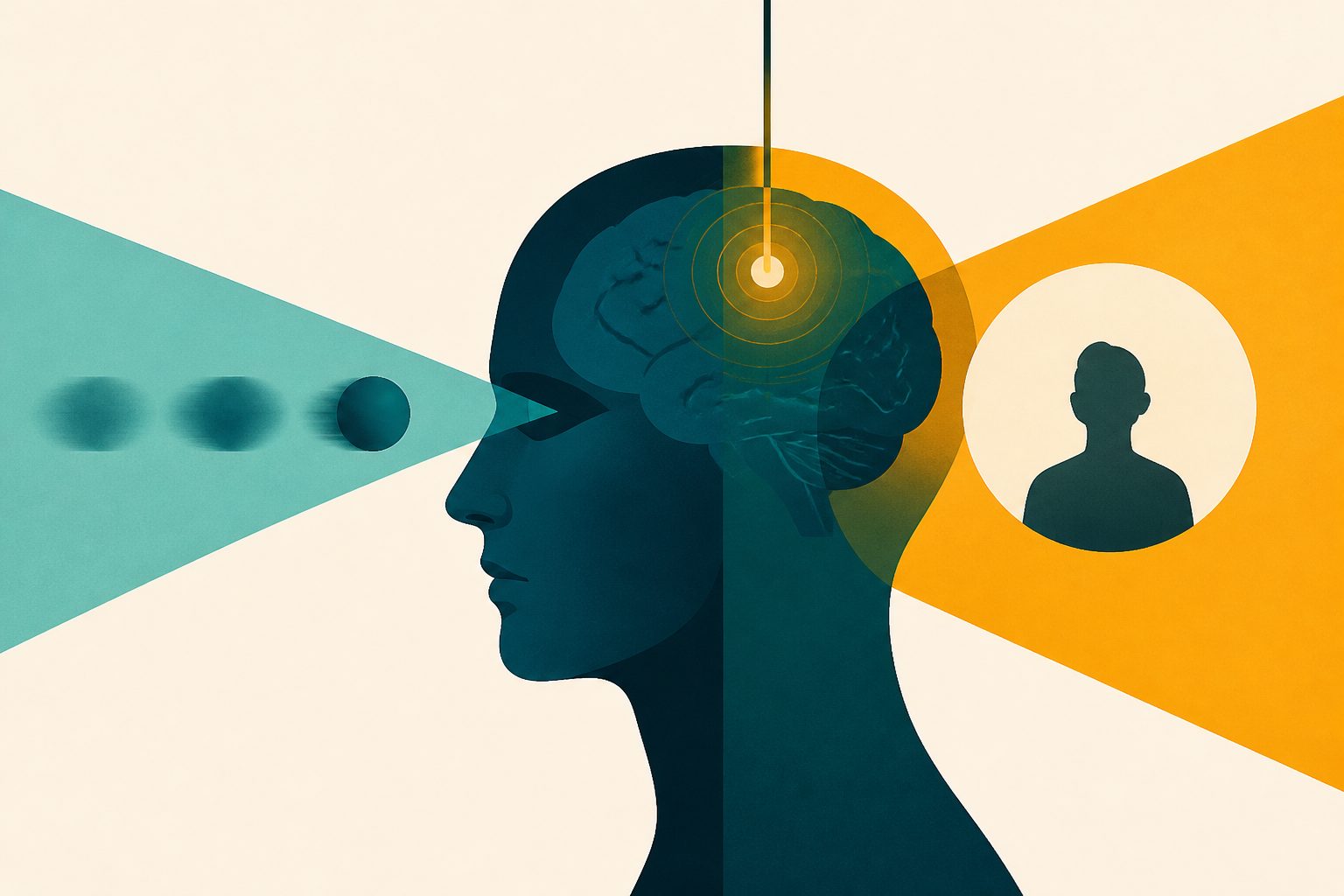
The findings suggest that judging what we see and judging how sure we are may rely on partly separate brain networks.
Researchers used two forms of non-invasive brain stimulation to test whether visual accuracy and confidence depend on the same brain circuits. They first strengthened connections between motion-processing and early visual areas, then disrupted activity in a region involved in evaluating decisions.
Strengthening the visual pathway affected both motion discrimination and confidence bias. Disrupting the intraparietal sulcus and nearby lateral intraparietal area changed metacognitive performance—how people evaluated their own decisions—without changing their ability to discriminate motion.
Evidence and caveats
This is a journal article reporting results from targeted, non-invasive brain-stimulation experiments in motion perception. The abstract does not provide the sample size, effect sizes, follow-up duration or detailed comparison procedures, so the strength and durability of the effects cannot be assessed here. The findings concern motion discrimination and confidence in perceptual decisions; their relevance to other senses, tasks or clinical applications remains uncertain.
// Source
Communications Biology · 2026 · DOI: 10.1038/s42003-026-10770-3
Authors: Paolo Di Luzio, Luca Tarasi, Alessio Avenanti, Juha Silvanto, Alejandra Sel, Vincenzo Romei
Institutions: University of Bologna, University of Macau, University of Essex, Catholic University of the Maule, Universidad Nebrija, Azienda-Unita' Sanitaria Locale Di Cesena