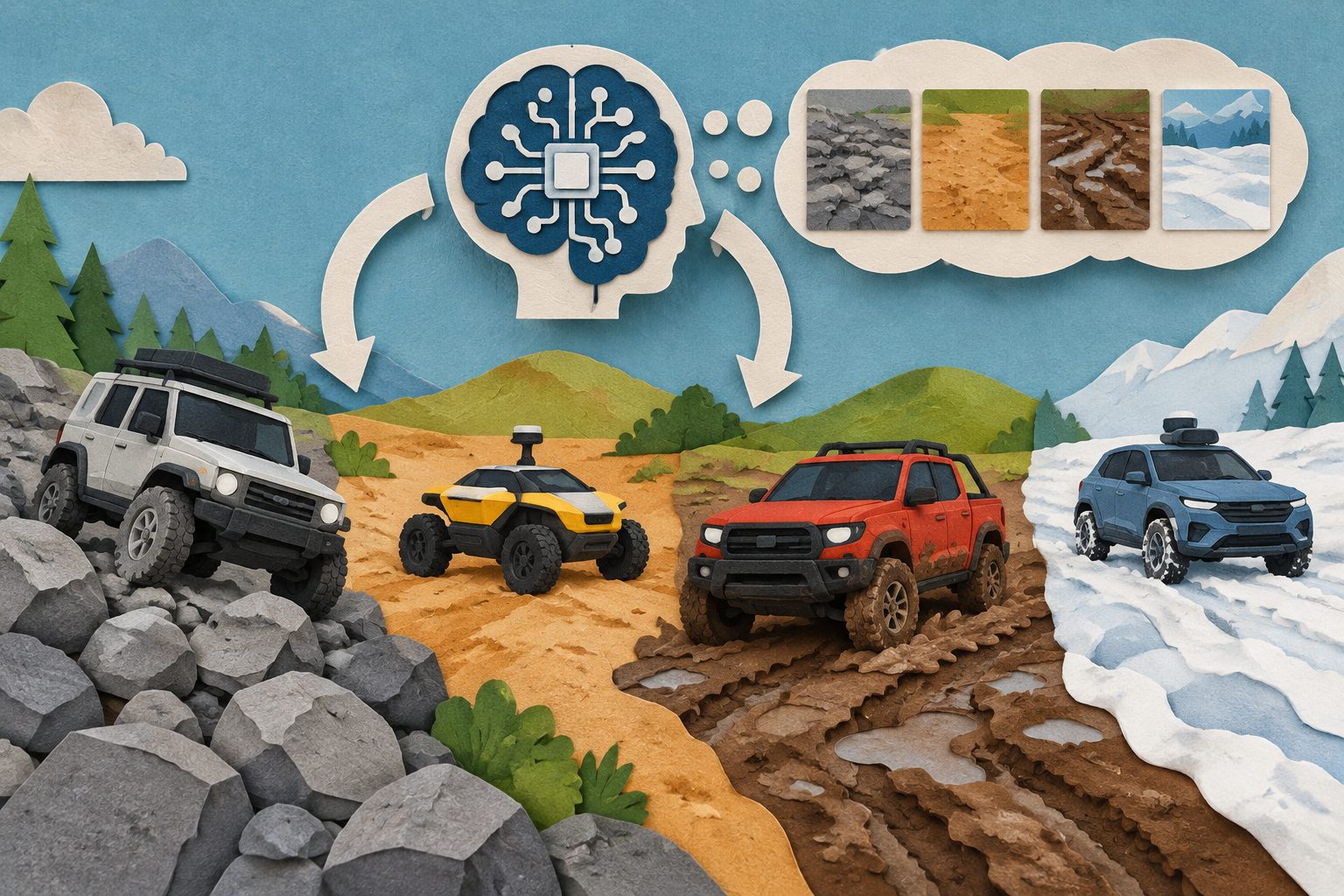
AnyNav combines a neural network that interprets visual input with physical models of terrain–vehicle interactions. Instead of requiring direct friction labels from real-world driving, it learns in a self-supervised way through an optimization process that uses physics-based predictions.
The estimated friction values help the system create paths that are physically feasible and time-efficient, along with matching speed profiles. The researchers report successful transfer from simulation to real robotic platforms, with robust performance across different four-wheeled vehicles and off-road environments.