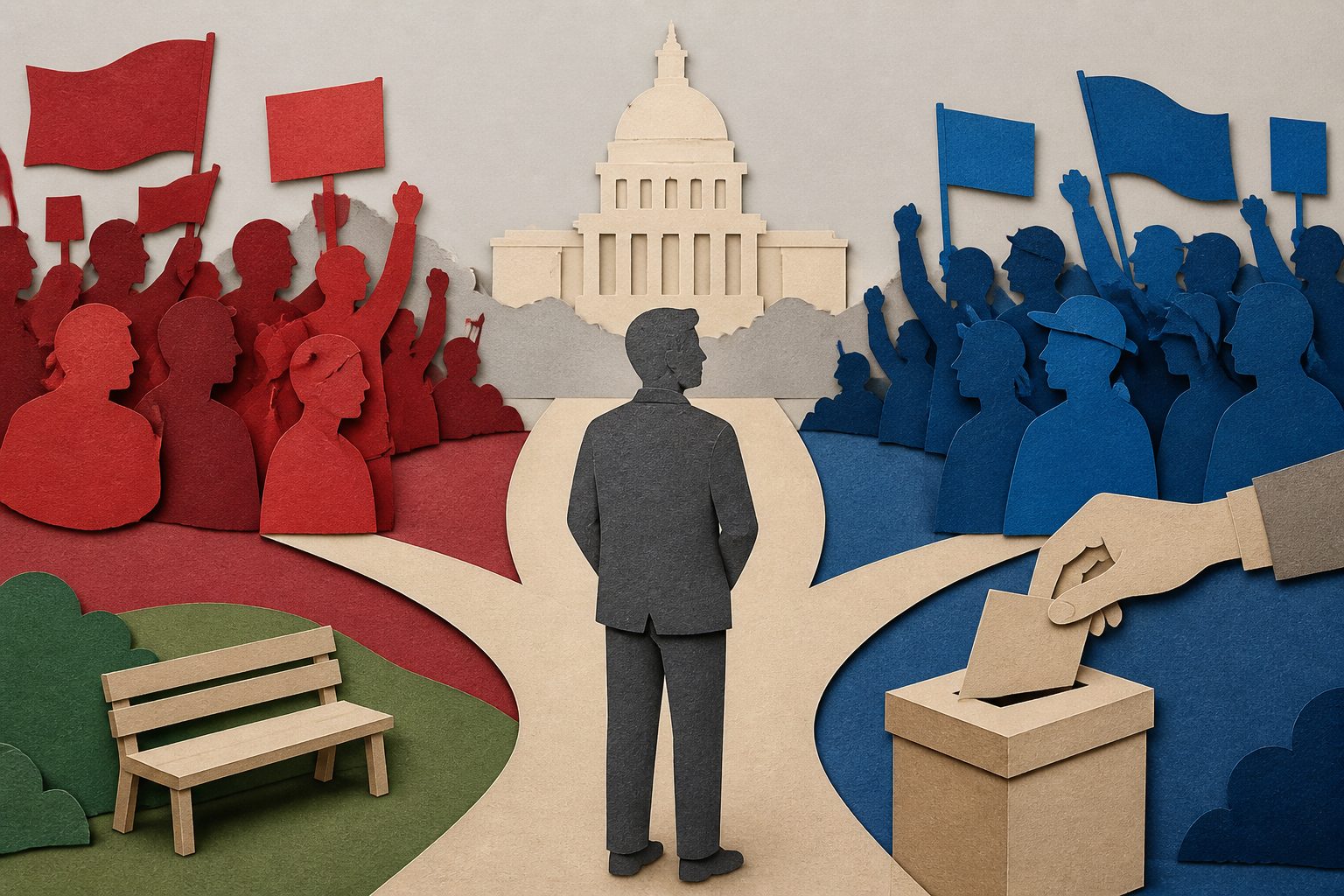
Researchers examined whether people who are not emotionally drawn toward one party over the other are all alike. They argue that comparing feelings toward the two parties alone can miss important differences in how warmly or coldly people regard both parties.
Across three nationally representative US surveys, the researchers identified two groups among people with similar feelings toward both parties. The groups reported different views of democracy and different patterns of democratic participation, suggesting that people who appear similarly unpolarized may not relate to democracy in the same way.