AI brain scans may help identify autism, but test results vary widely
A review of 86 studies found promise in MRI-based systems, while differences between datasets, scanners and testing methods limit their clinical use.
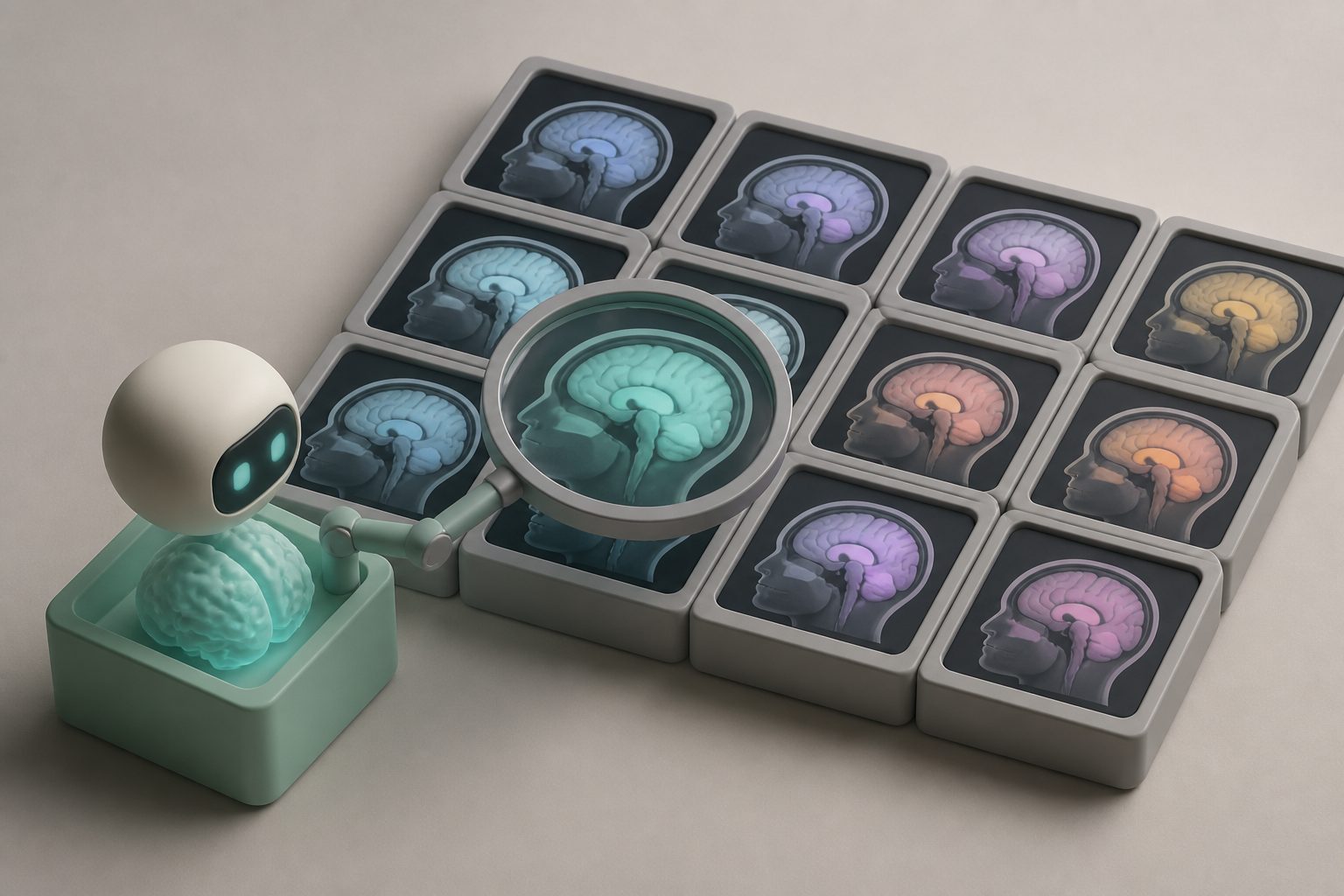
Editorial illustration — not from the study.
The review examined MRI-based machine-learning and deep-learning studies published from 2015 to 2026. It covered structural MRI, which shows brain anatomy, functional MRI, which measures patterns of brain activity and connectivity, and systems that combine both types of scan. Functional MRI was the most commonly studied approach.
The researchers found that results often depended more on how a system was tested than on the particular AI model. They identified recurring problems including small and varied datasets, differences between scanners and sites, inconsistent data-processing methods, limited ability to explain predictions and uncertain performance in wider clinical populations.
What the review found
Across the 86 reviewed articles, functional MRI was the most frequently used imaging type. Graph-based neural networks, attention-based systems such as transformers, and approaches combining multiple data types were prominent recent methods.
Reported performance changed sharply with the evaluation design. Studies using data from a single site reported accuracy from 87.4% for structural MRI to 99.39% for functional MRI in the examples reviewed. When researchers used the broader ABIDE consortium dataset, reported accuracy fell to about 70–75%, while tests that trained on some sites and tested on a separate site were near 67%. The review notes that results near 97–100% often involved small or balanced samples, slice-level data splitting or testing that was not independent of the scanning site.
The review also found that papers using the same named dataset did not necessarily use the same scans: studies referring to ABIDE I used roughly 870 to more than 1,100 scans after different quality checks and processing choices. This makes direct comparisons between reported results difficult. Only a small number of studies tried to identify the brain regions driving their predictions, and those reports did not agree well.
Why clinical use remains distant
MRI-based AI could eventually support assessment by identifying patterns associated with autism in brain structure or functional connectivity. The review suggests that combining structural, functional and clinical information may provide a fuller basis for these systems.
For now, however, promising results in research datasets do not establish that these tools can reliably support diagnosis across clinics and patient groups. Larger, harmonized datasets, clearer explanations of model decisions and testing across independent sites are needed before routine clinical use can be supported.
Evidence and caveats
This was a systematic review conducted under PRISMA guidelines. The researchers searched Scopus, Web of Science and PubMed, with supplementary searches, for studies published between 2015 and 2026 and selected 86 journal articles for detailed analysis. The review compared imaging types, data-processing steps, AI methods and validation strategies; it did not itself test an AI system on new patients.
The underlying studies were limited by small sample sizes, varied scanner settings and differences in preprocessing and validation. Many relied on retrospective public datasets, and performance was often lower when models were tested across sites rather than within one site. These issues limit external validation and make generalizability to diverse clinical populations uncertain. The review concludes that current evidence is insufficient to justify daily clinical use.
A 20-year comparison in California’s Central Valley found that reduced tillage with cover crops produced more stable soil aggregates, greater water retention and different forms of carbon protection than standard tillage without cover crops. The conservation system also retained room for additional carbon storage, although the study measured potential rather than future gains.
Human forebrain organoids classified artificial tactile Braille signals after a sensor converted the touch data into electrical stimulation. Accuracy averaged 61% with one organoid and rose to 83% when responses from three organoids were combined.
A study in mice found that a peptide targeting the memory-related protein CPEB3 reduced the persistence of traumatic memories and anhedonia, a loss of pleasure. The findings are an early genetic preclinical test of a possible approach for PTSD, not evidence of a treatment in people.