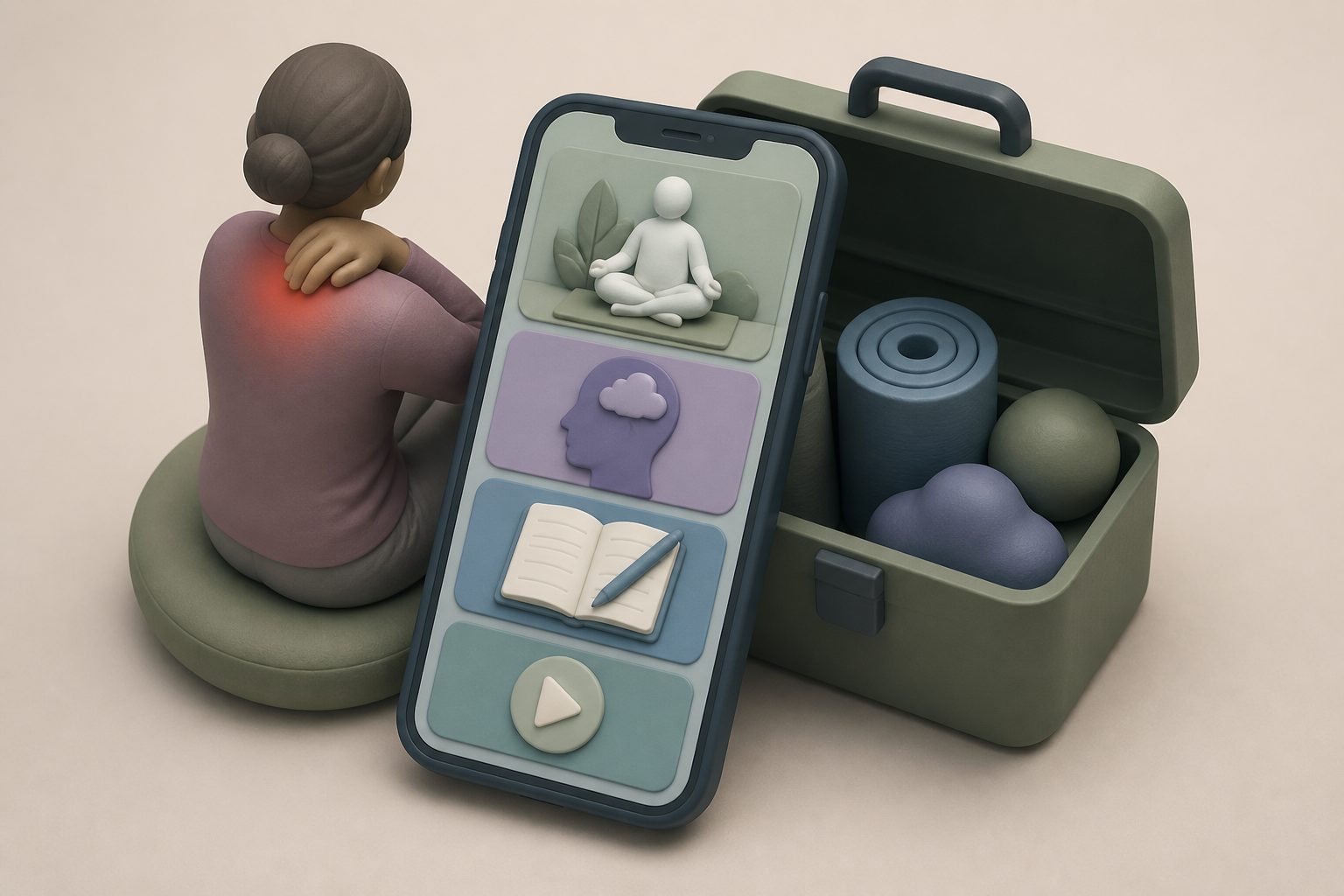
Participants favored useful tracking and respectful, customizable support over game-like features or constant data collection.
Researchers interviewed 42 U.S. adults aged 45 and older who had chronic pain and symptoms of depression or anxiety. Participants favored free apps with clear privacy policies and useful tools, and said real-world goals and tangible health improvements would motivate them more than game-like features.
Many wanted to track mood and pain together to look for links with daily events, but they reported navigation problems and concerns about apps collecting personal data without their active input. They preferred on-demand tools and occasional notifications that could be adjusted for timing and frequency, along with a serious and respectful tone.
What participants wanted
Participants strongly preferred apps that were free, explained their privacy policies clearly and added useful functions to their lives. They said they were more motivated by achieving real-life goals and seeing tangible health improvements than by gamification, or game-like rewards and features.
Many participants were cautious about apps passively collecting certain kinds of data, especially when the data could be used to infer their mental health. Most did not know about apps aimed at chronic pain, but they were interested in tools that could track mood and pain and help identify links among those symptoms, app use and other life events.
Although participants used apps daily, many described problems navigating them. They preferred having tools available when needed, while still seeing value in occasional push notifications if the timing and frequency were thoughtful and customizable. They also cautioned against an overly cheerful, childish or overly casual tone for apps addressing mental health and chronic pain.
Evidence and caveats
This was a qualitative interview study, not a test of an app’s effectiveness. Researchers interviewed 42 adults in the United States, all aged 45 or older, who had pain on most or every day for three months and symptoms of depression or anxiety. The findings reflect participants’ reported preferences and experiences; they do not show that particular app features improve mental health or pain outcomes. The sample had a mean age of 57, included 32 women (76%), and may not represent all adults with chronic pain or mental health symptoms.
// Source
JMIR mhealth and uhealth · 2026 · DOI: 10.2196/87358
Authors: Abby L. Cheng, Christine Y Gou, Adriana Martin, Sarah M. Hartz, Joanna Abraham