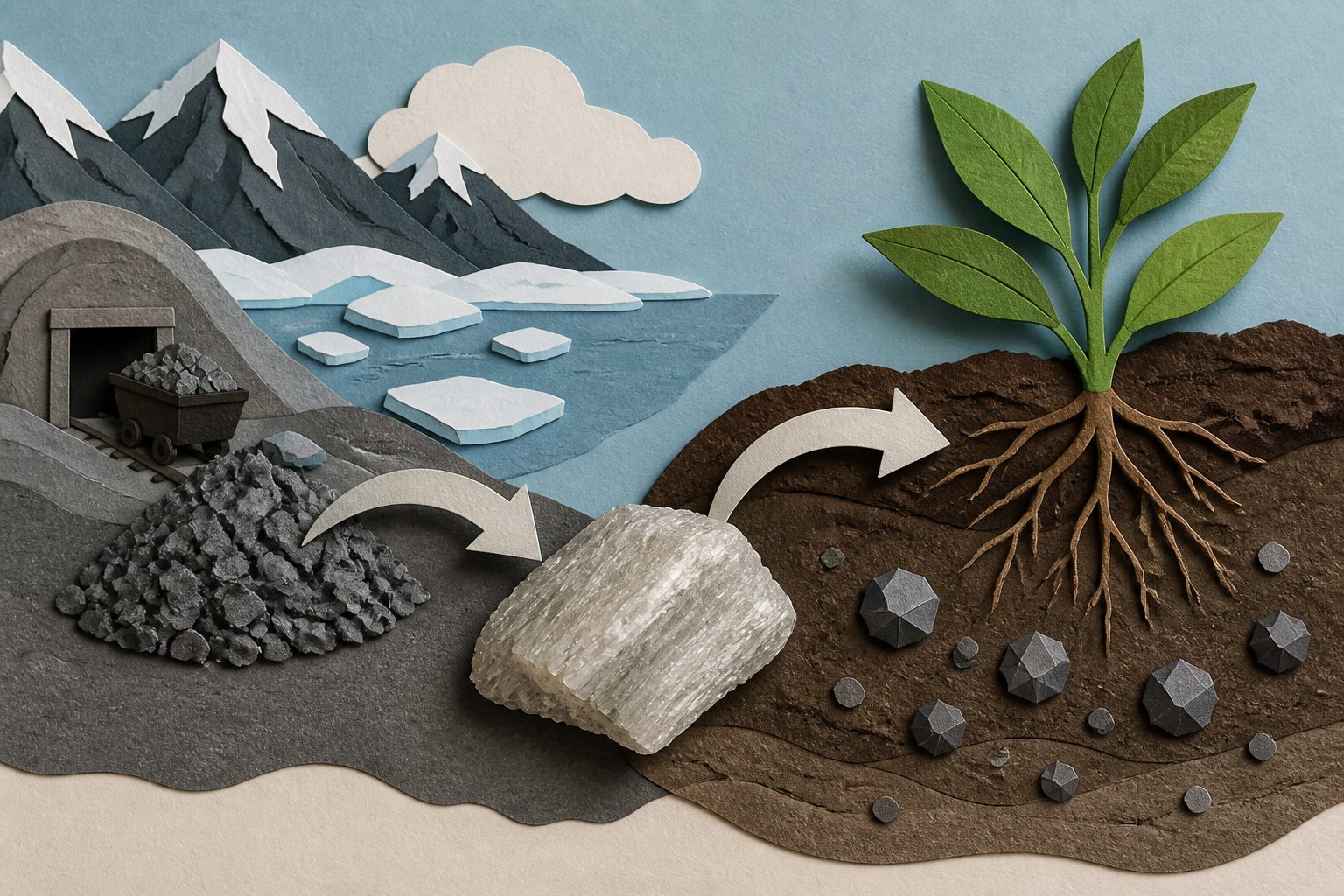
Researchers mixed vermiculite-serpentine concentrate with agricultural and urban soils, finding benefits that varied with contamination and dose.
Researchers made mixtures containing vermiculite-serpentine concentrate and agricultural soil, using concentrations of 10–60%. They also added 20% concentrate to urban soils from Apatity, Kirovsk and Monchegorsk in the Murmansk Region. The material made the mixtures more alkaline and increased mobile calcium and magnesium.
The effects on nickel depended on the soil and the amount added. In slightly contaminated agricultural soil, 10–50% concentrate increased mobile nickel, while concentrations above 60% lowered it below background levels. In heavily contaminated Monchegorsk soil, the concentrate steadily reduced mobile nickel and copper.
What the soil tests found
The concentrate came from overburden rocks at the Kovdor phlogopite deposit and contained 30–35% serpentine and 28–31% vermiculite by weight. It was alkaline, with a pH in water of 8.9, and had a total nickel content of 730 mg/kg.
Adding 10–60% concentrate to agricultural soil increased alkalinity and the mobile forms of calcium and magnesium. In slightly contaminated agricultural soil, mobile nickel rose from 1.5 to 2.5 mg/kg when 10–50% concentrate was added, but fell below background levels when more than 60% was used. Marigold root mass increased from 0.09–0.10 to 0.13–0.18 grams per plant across this concentration range, with no visible signs of toxicity.
For urban soil from Monchegorsk, which had high nickel and copper contamination, adding 20% concentrate consistently reduced the mobile forms of both metals. The abstract does not give the size of those reductions. Results for urban soils from Apatity and Kirovsk are not detailed in the abstract.
Why the waste could matter
Mining overburden is a disposal problem in the Arctic zone of Russia. The results suggest that vermiculite-serpentine concentrate could give some of this waste a use as a soil amendment for soils that lack major nutrients or are contaminated with metals.
The findings also show why the soil and application rate matter. The concentrate lowered mobile nickel and copper in the heavily contaminated Monchegorsk soil, but moderate additions increased mobile nickel in slightly contaminated agricultural soil. The researchers therefore recommend it as a possible amendment for soil remediation, while the results do not support treating it as uniformly beneficial in every soil.
Evidence and limits
The study used laboratory soil mixtures and a plant test with French marigolds, rather than outdoor field trials. It examined agricultural soil and urban soils from three cities, but the abstract gives detailed metal results only for the agricultural soil and Monchegorsk soil. The study measured mobile fractions of elements and root mass; it does not report longer-term changes, performance under Arctic field conditions, effects on edible crops or whether metals would remain immobilized over time. The concentrate itself also contains a relatively high total nickel concentration, so its use would require testing at appropriate rates and under local conditions.