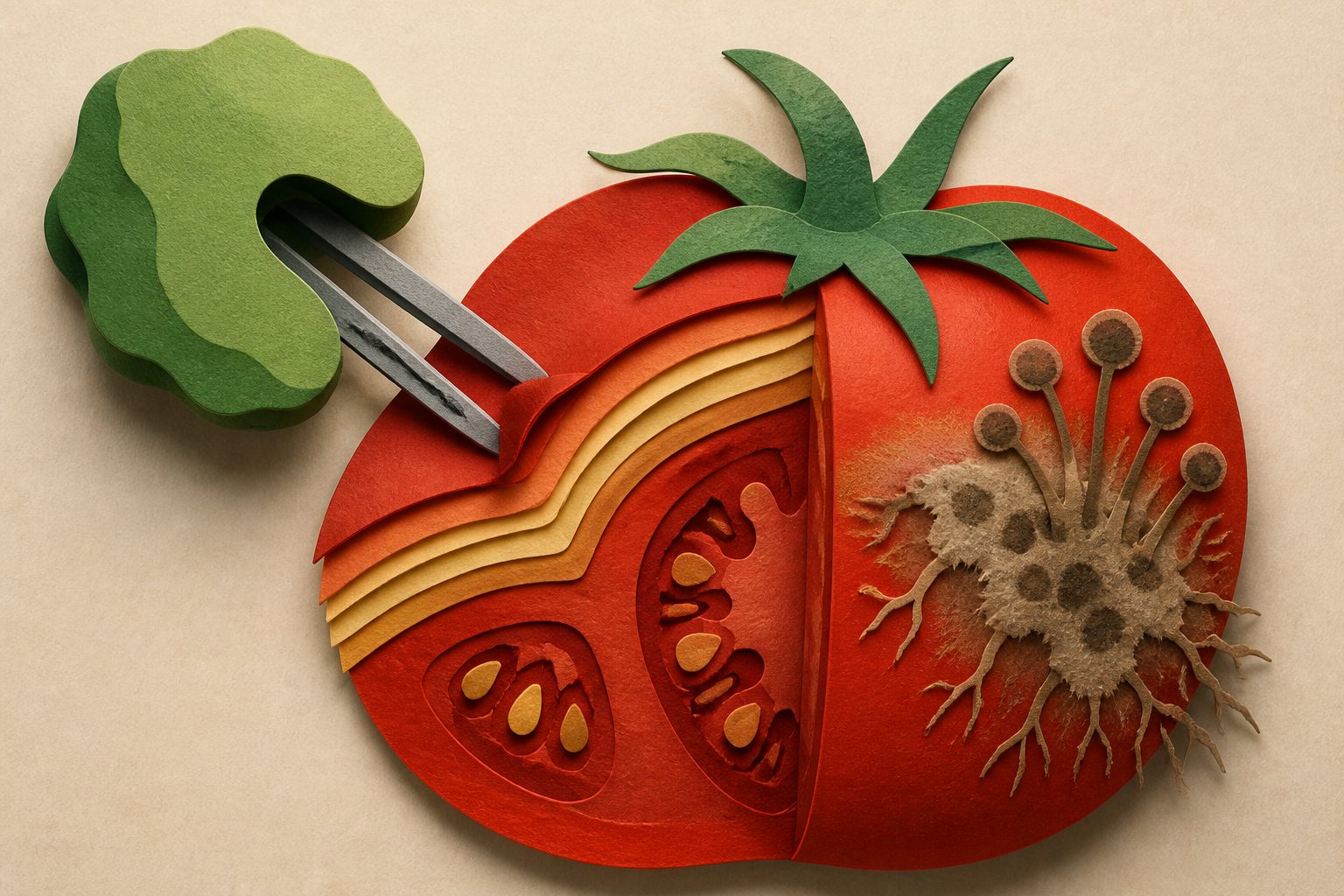
Tomato plants engineered to produce more of the enzyme developed fruit with less protective cuticle and wax.
The researchers made tomato plants produce the Arabidopsis thaliana AtGPAT4 enzyme specifically in the outer tissues of their fruit. The enzyme supplies building blocks used to assemble cutin, the main structural material in the fruit cuticle.
Contrary to expectations, the engineered fruit had lower levels of cutin and outer-surface waxes. Its cuticle was less stiff and more easily deformed, and the whole fruit was less firm. These changes did not affect heat stability or water retention, but the fruit was more susceptible to infection by Botrytis cinerea.
Evidence and caveats
This was a study of transgenic tomato lines using phenotypic, microscopic, spectroscopic, gene-expression and surface-mechanical analyses, along with tests of water loss, firmness, heat stability and infection by Botrytis cinerea. The abstract does not report the number of plant lines or fruits tested, the size of the observed effects, or how the results vary across growing conditions or tomato varieties. The findings directly concern the engineered lines and the tested fungus; their broader relevance to other crops or pathogens remains unclear.