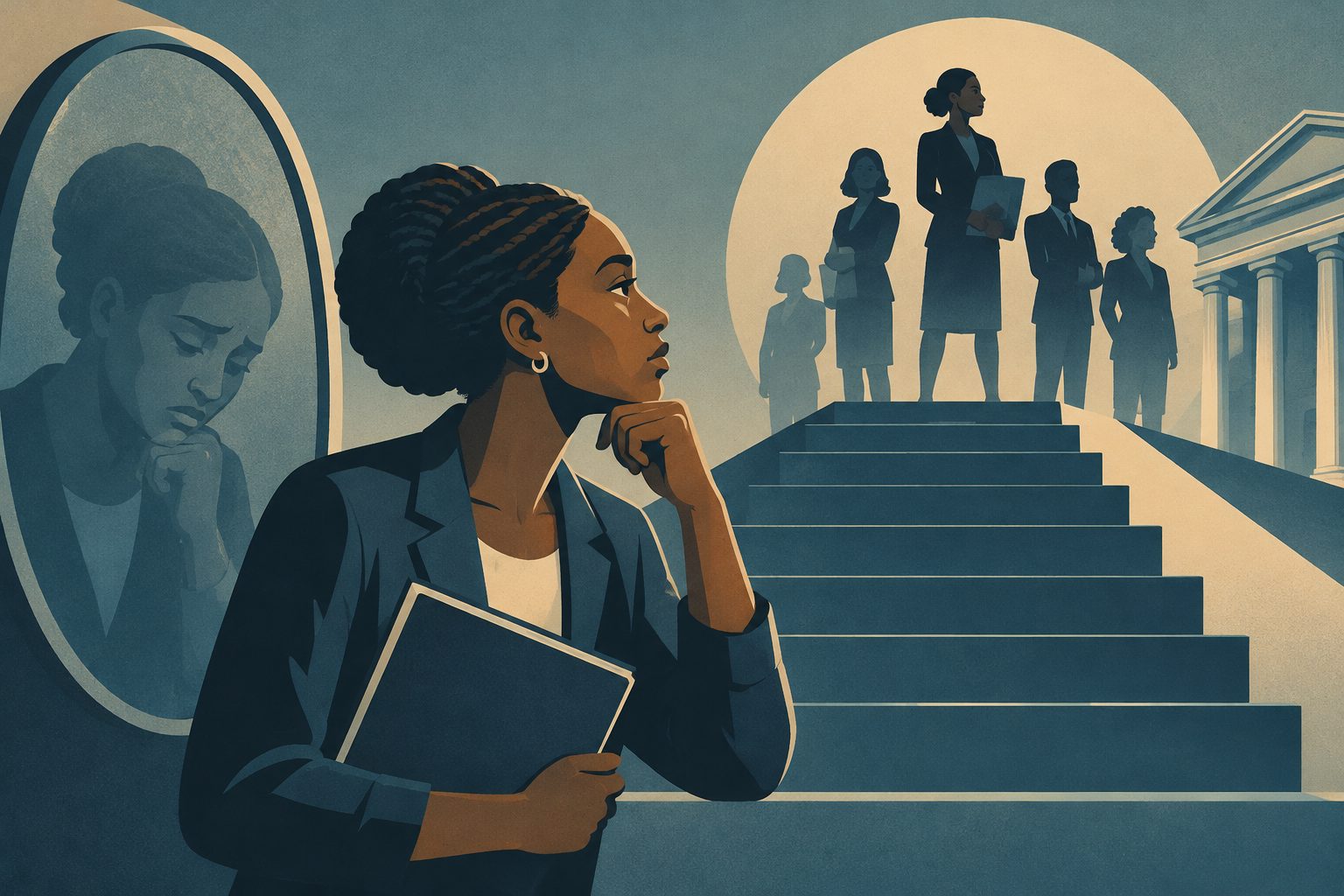
Interviews identified gender stereotypes, limited support and fear of marginalisation alongside institutional barriers to advancement.
Researchers interviewed 20 women academics, from junior lecturers to associate professors, about women’s leadership in higher education. The interviews identified eight themes, including lower self-esteem, perceptions of men as more capable, competition for scarce opportunities, feeling unable to meet leadership requirements, lack of support, fear of marginalisation, patriarchal institutions and wider social stereotypes.
The study presents these issues as interconnected rather than as individual shortcomings alone. Its authors recommend institutional change, stronger mentorship and sponsorship, inclusive leadership development, reviews of promotion policies and efforts to challenge the idea that leadership is naturally masculine.
What the interviews showed
The interviews indicated that participants associated women’s underrepresentation in leadership with a combination of factors. These included lower confidence, views that men are more competent leaders, competition among women for limited opportunities, concerns about meeting expectations for research, qualifications and experience, inadequate support, fear of being marginalised, patriarchal institutional cultures and societal stereotypes.
The researchers said that treating self-esteem, perceptions of male competence, lack of support and fear of marginalisation as purely personal problems risks overlooking the organisational settings in which they arise. Some participants supported having more women in leadership, while others repeated the idea that leadership traits are mainly masculine. Participants also described competition as a response to scarce opportunities in settings where leadership has historically been male-dominated.
Why university culture matters
The findings suggest that the shortage of women in senior academic leadership is not only a matter of individual confidence or ambition. In this study, participants’ views were connected to institutional practices, social expectations and organisational cultures that can shape who is seen as a credible leader and who receives support.
The researchers argue that addressing the imbalance requires changes within higher education institutions, including mentorship and leadership development, fairer promotion processes, networking and sponsorship opportunities, and efforts to challenge patriarchal norms and gender stereotypes. They also emphasise that women’s experiences may differ according to factors such as career stage, race, age and academic standing.
Evidence and limits
This was an exploratory qualitative study based on semi-structured interviews with 20 purposively and conveniently selected black African women academics at one South African higher education institution in Limpopo. The participants ranged from junior lecturers to associate professors, and the researchers analysed the interviews thematically.
Because the study examined the experiences and perceptions of a selected group at one institution, it does not show how common these views are across South African universities or establish that any one factor causes underrepresentation. Male academics, university administrators and other stakeholders were not included, so the study does not capture their perspectives. The authors recommend comparisons across universities, fields and leadership levels, as well as research involving these additional groups.
// Source
International Journal of Studies in Psychology · 2026 · DOI: 10.66434/ijspsy.v6i3.614
Authors: Abgirl Muleya
Institutions: University of South Africa