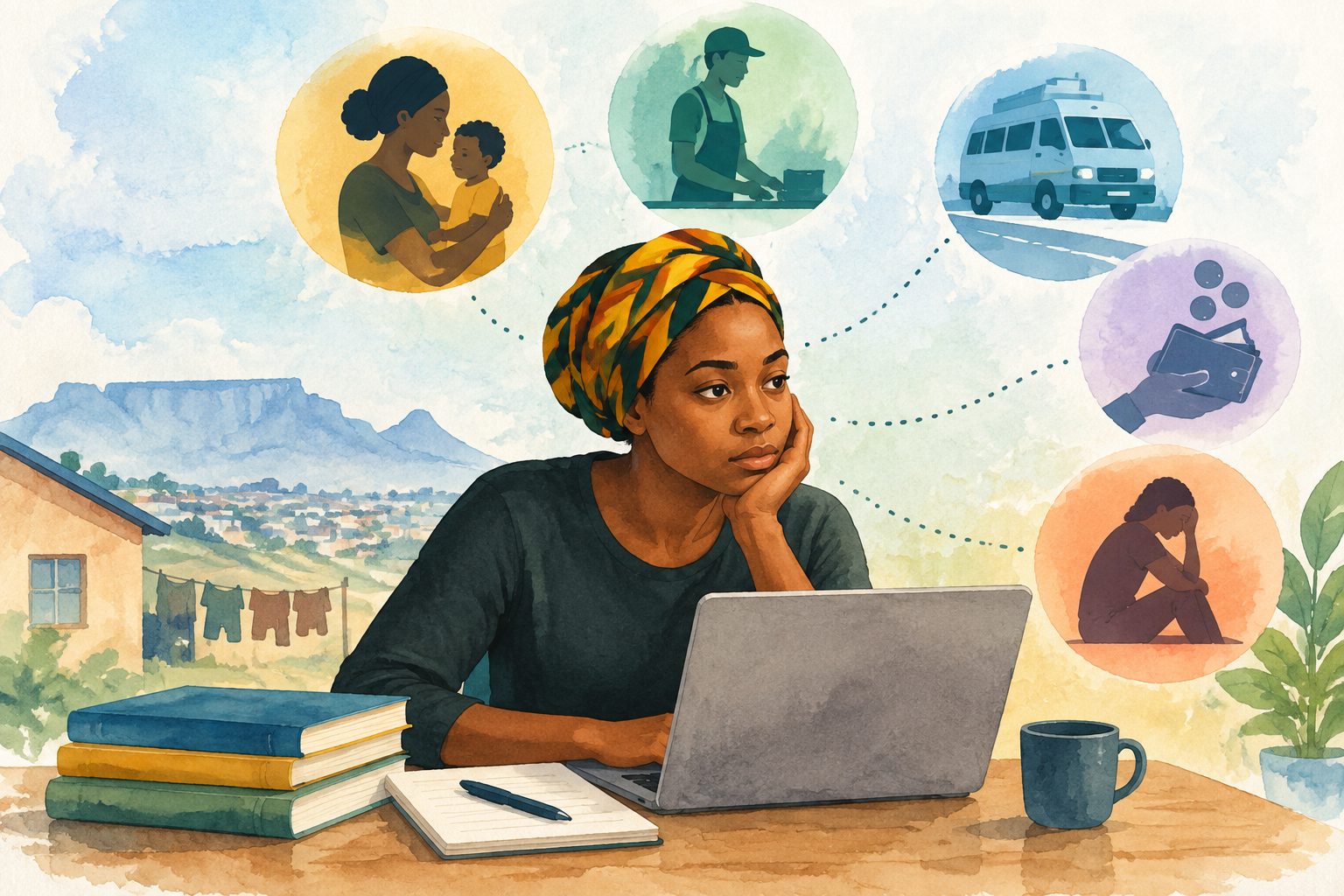
Interviews with students who repeatedly failed modules pointed to distress, money problems, institutional gaps and competing responsibilities.
Researchers interviewed 35 students who had failed one or more modules at least twice at a selected South African university. The online interviews asked about academic difficulties, mental health, finances, institutional support, personal responsibilities and coping strategies.
The analysis identified five connected areas of difficulty: academic struggles; emotional and psychological distress; financial and socioeconomic barriers; gaps in institutional support; and conflicts between study and personal roles. The study describes these factors as interacting within students’ experiences of academic failure.
What students described
Five themes emerged from the interviews. Students described difficulties with academic work and self-directed learning, as well as emotional and psychological distress. They also reported financial and socioeconomic barriers, shortcomings in institutional support, and conflicts between studying and personal responsibilities.
The researchers concluded that these personal, structural and institutional pressures combine to shape how students experience academic failure in open distance learning. The study recommends more integrated counselling, academic support and retention strategies.
// Source
International Journal of Studies in Psychology · 2026 · DOI: 10.66434/ijspsy.v6i3.595
Authors: Enid Manyaku Pitsoane, Tonny Nelson Matjila, Kgomotso Nyamakazi, Lekgowe Thipe, Maserame Patience Dipale
Institutions: University of South Africa