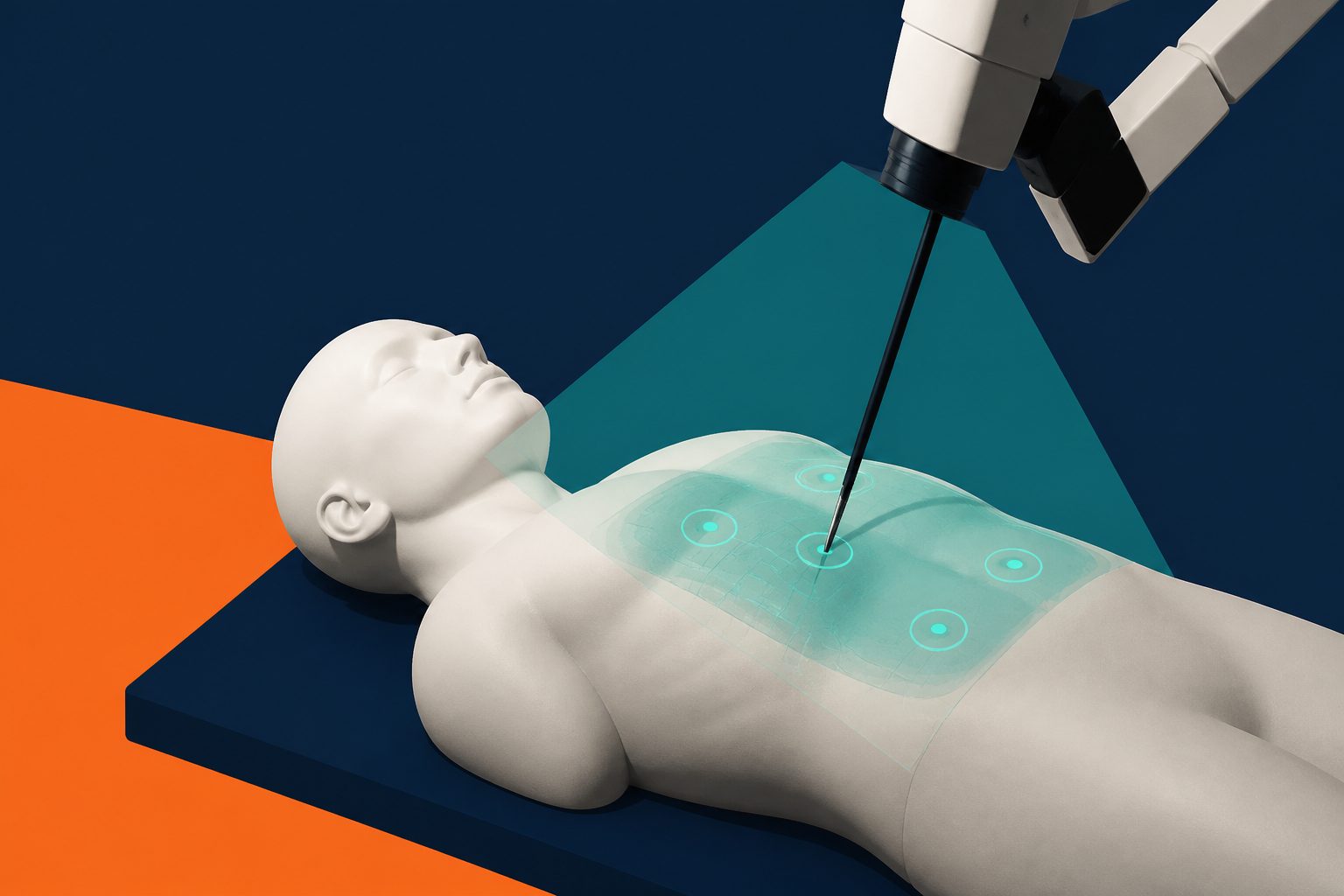
Researchers developed ARport, an augmented-reality system that displays preplanned locations for robotic surgery ports directly on a body surface. The system uses a headset’s camera, depth and position data to match a digital anatomical plan to the physical phantom without external markers or sensors.
In full-scale human-phantom experiments, the projected port locations consistently matched the planned locations on the phantom. The authors say the approach could support faster surgical preparation, but its performance in clinical procedures remains to be tested.