An assessment found no other herbicide matched phenmedipham’s broad weed control in sugar beet across the countries studied.
Phenmedipham has been used in European sugar-beet farming for decades and is undergoing a renewal evaluation. Researchers compared available weed-control options across eight EU member states covering 85% of Europe’s sugar-beet cultivation area, and found that none of the alternatives met all the required standards for selectivity, application timing, leaf-based action and weed coverage.
Field results and surveys from Denmark, Germany and France indicated weaker weed control without phenmedipham. The study estimates that alternative strategies would cost 40–100% more while reaching 60–85% effectiveness, compared with more than 95% for phenmedipham-based programs.
Weed control without phenmedipham
Across the eight EU member states, 9–17 authorized active substances were considered in each country, but none were shortlisted as a suitable replacement under the study’s criteria. The researchers identified phenmedipham as the only broad-spectrum, leaf-active herbicide that met those requirements for post-emergence control in European sugar beet.
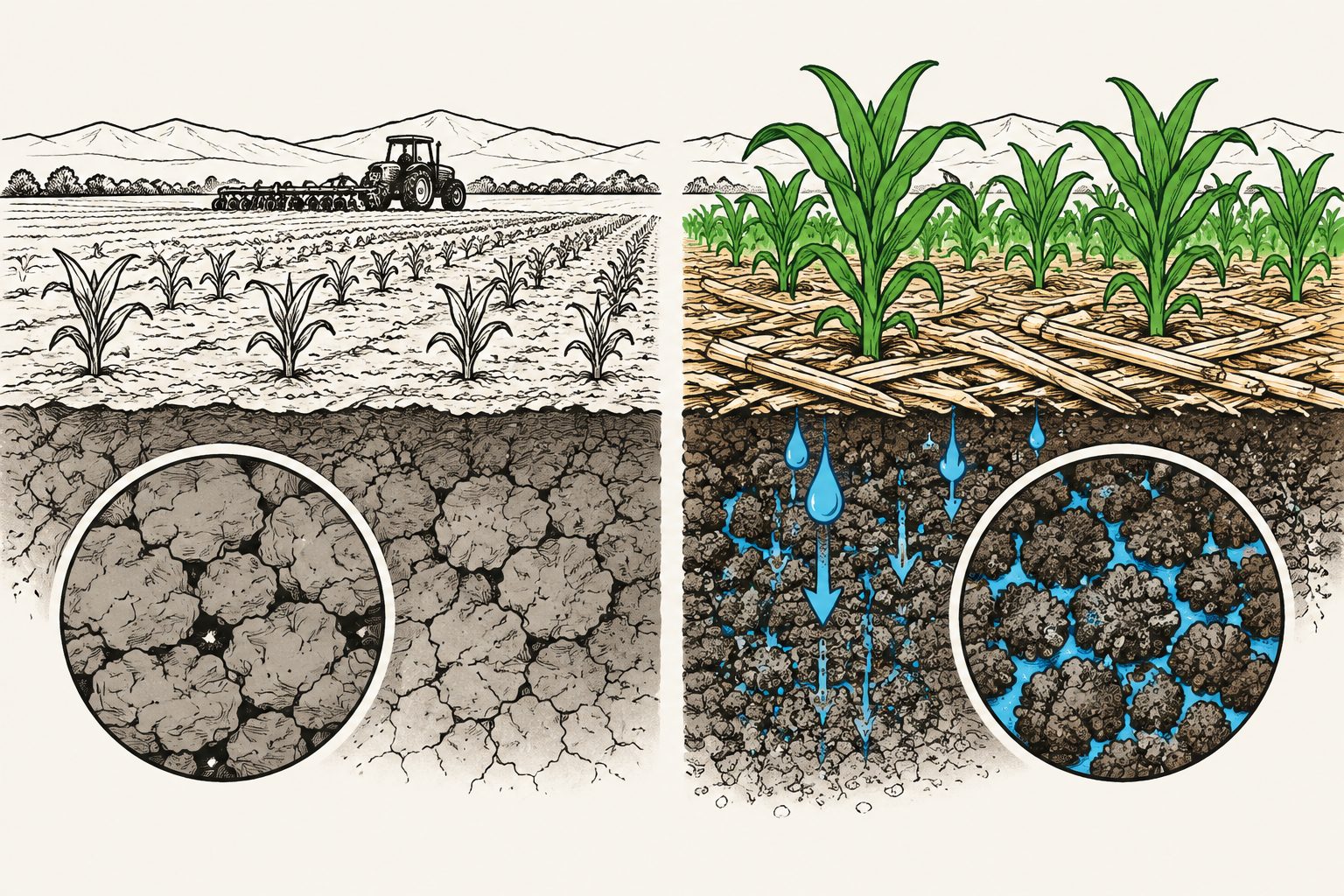
In Danish field trials, strategies without phenmedipham left 26% weed coverage, compared with 3% when it was used, and were associated with 7% yield losses. German trials showed up to a 30% reduction in weed-control effectiveness without phenmedipham. French surveys found inadequate control of common lambsquarters, especially during dry springs when herbicides that act through the soil performed poorly.
The economic analysis estimated that replacement strategies would raise costs by 40–100% and achieve only 60–85% effectiveness, compared with more than 95% for phenmedipham-based programs. The researchers estimate that withdrawal could cause 15–25% yield losses, add €120–375 million in annual costs, affect more than 100,000 growers and put 24,000 rural processing jobs at risk.
Why the herbicide matters
Effective weed control is important for maintaining sugar-beet yields and keeping production costs manageable. The study’s assessment suggests that withdrawing phenmedipham would leave growers without a chemical option that offers comparable broad weed coverage after crops emerge.
The estimated consequences include lower yield stability, higher costs for replacement strategies and pressure on the wider sugar-beet production and processing sector. These estimates support the researchers’ conclusion that phenmedipham meets the criteria for an essential use in European sugar-beet farming.
Evidence and caveats
The assessment combined a comparison of authorized herbicides across eight EU member states with field trials in Denmark and Germany, surveys in France, and an economic analysis. The countries studied represented 85% of European sugar-beet cultivation area, but the abstract does not give the number of trials or survey participants, nor does it describe the assumptions behind the cost and loss estimates in detail.
The findings therefore describe the researchers’ assessment of available control strategies and projected consequences of withdrawal. The abstract does not report a direct continent-wide experiment measuring what would happen after phenmedipham was removed.
// Source
Journal of Plant Diseases and Protection · 2026 · DOI: 10.1007/s41348-026-01308-0
Authors: Christian J. Kuster, Herve Tossens, Mariana Jordao, Martin Wegener
Institutions: Bayer (Germany), Bayer (Belgium)