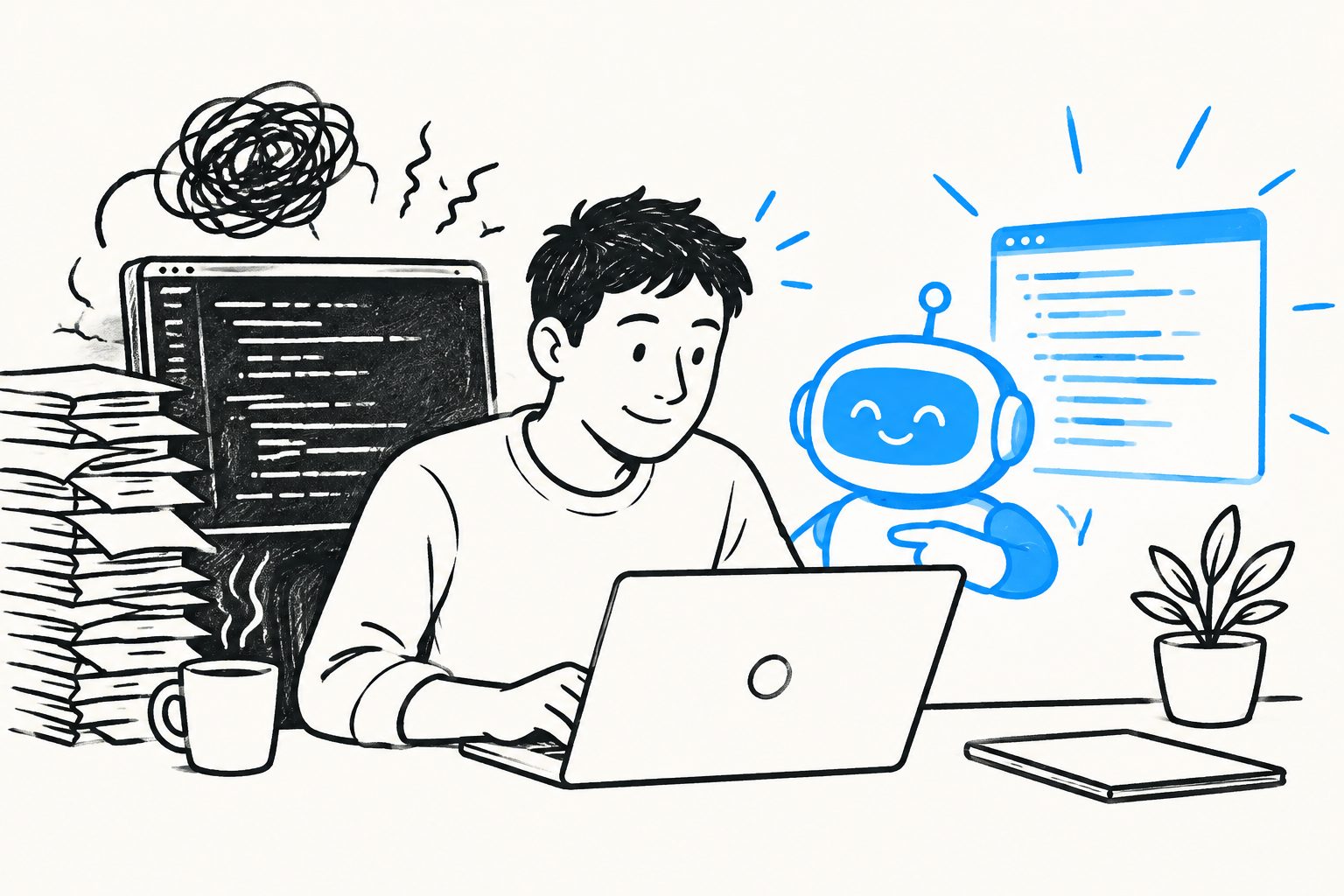
A six-month study found that engineers spent less time writing code but more effort directing, checking and correcting AI output.
Researchers surveyed professional software engineers twice, six months apart. Across the two questionnaires, participants generally reported spending less time on traditional development tasks, including writing, testing and reviewing code; 82% said they spent less time writing code.
The researchers describe a broader shift from creating code to verifying it, along with a new category of work involving the direction, evaluation and correction of AI output. Although 84% of participants reported improved productivity at both time points, the share of matched participants reporting a worse experience in at least one area rose from 14% to 27%.
How AI changed the work
The study found that participants perceived spending less time on most development tasks, with the largest reported reduction in writing code: 82% said they spent less time on it. Their focus shifted from creating code toward checking and verifying it, although the increase in verification work was modest.
The researchers propose the term “supervisory engineering work” for the effort involved in directing AI, evaluating its output and correcting errors. This includes shaping the output before and during its creation, not only reviewing finished code.
Participants’ productivity perceptions remained positive: 84% reported an improvement at both survey time points. At the same time, among the 95 people who completed both questionnaires, the proportion reporting a worse experience in at least one dimension nearly doubled, from 14% to 27%. Flow state and cognitive load worsened, while feedback loops—the speed of receiving information about work—improved.
Evidence and caveats
This was a longitudinal mixed-methods study based on two online questionnaires given six months apart. There were 158 eligible participants at the first time point, 101 at the second, and 95 people in the matched group. The qualitative responses were used to add context to the quantitative results.
The findings measure engineers’ reported perceptions, not direct changes in code quality, output or task completion. The study therefore shows how participants experienced and judged their work, rather than proving that AI coding assistants caused every reported change. The drop from 158 eligible participants at the first survey to 101 at follow-up also means the longitudinal results come from a smaller group.
// Source
ACM Transactions on Software Engineering and Methodology · 2026 · DOI: 10.1145/3861343
Authors: Annie Vella, Kelly Blincoe
Institutions: University of Auckland