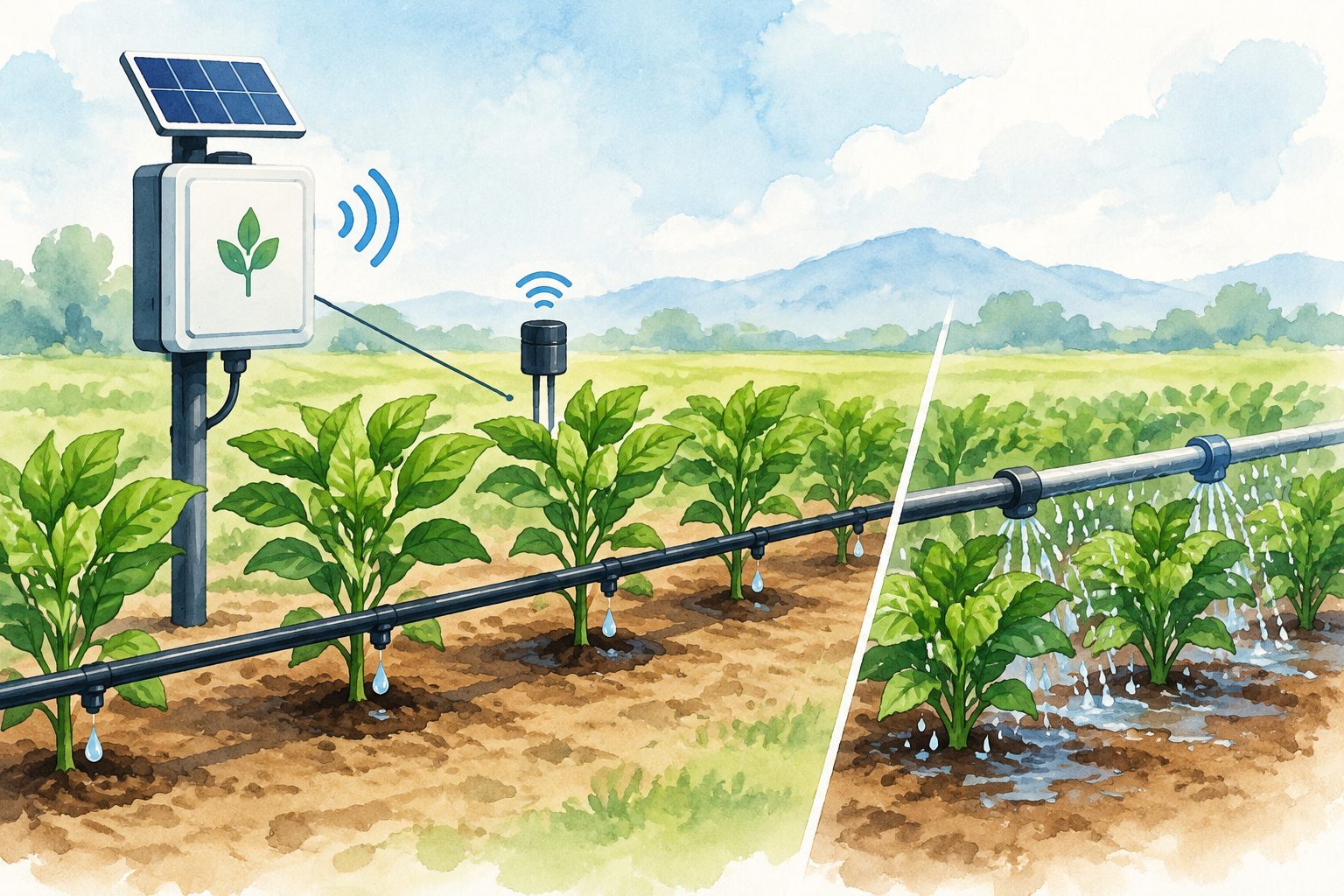
The device made local watering decisions from soil and weather data without relying on a cloud connection.
The system combines environmental sensors, lightweight machine-learning software and automated controls. A Raspberry Pi 4 handled AI inference, while an STM32 microcontroller controlled the irrigation equipment; decisions were made locally using soil moisture, temperature, humidity, rain and crop-specific thresholds.
The researchers report that the system operated without a continuous internet connection, with an average latency of 34 milliseconds and power use below 2.5 watts. In field tests in semi-arid agricultural areas, it reduced water use by up to 38% and increased crop yield by 20% compared with conventional time-based irrigation schemes.
Evidence and caveats
The evidence comes from an article reporting field tests in semi-arid agricultural areas, with comparisons against conventional time-based irrigation. The abstract does not provide the number of farms, plots or growing seasons, identify the crops tested, describe the statistical analysis, or give details of the testing conditions. It therefore supports the reported results in those tests but does not show how broadly they apply.
// Source
Progress in Electronics and Communication Engineering · 2026 · DOI: 10.31838/ece/03.02.04
Authors: Fahad Al-Jame, Perera Manthila
Institutions: University of Moratuwa, Kuwait Institute for Scientific Research